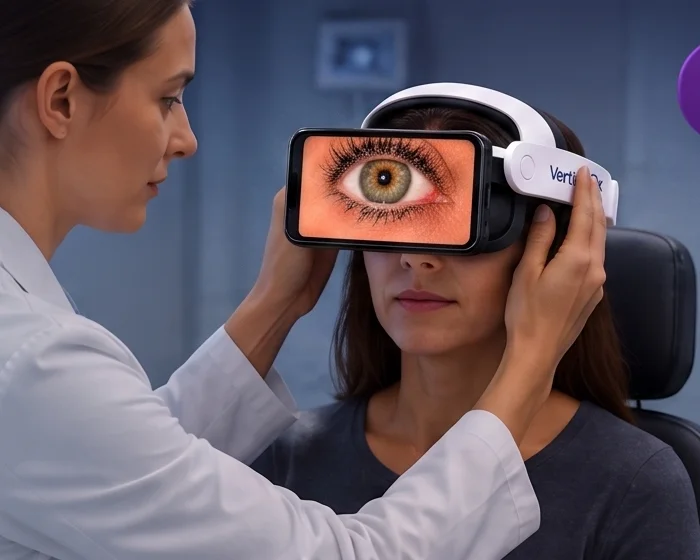
Secure the Headset
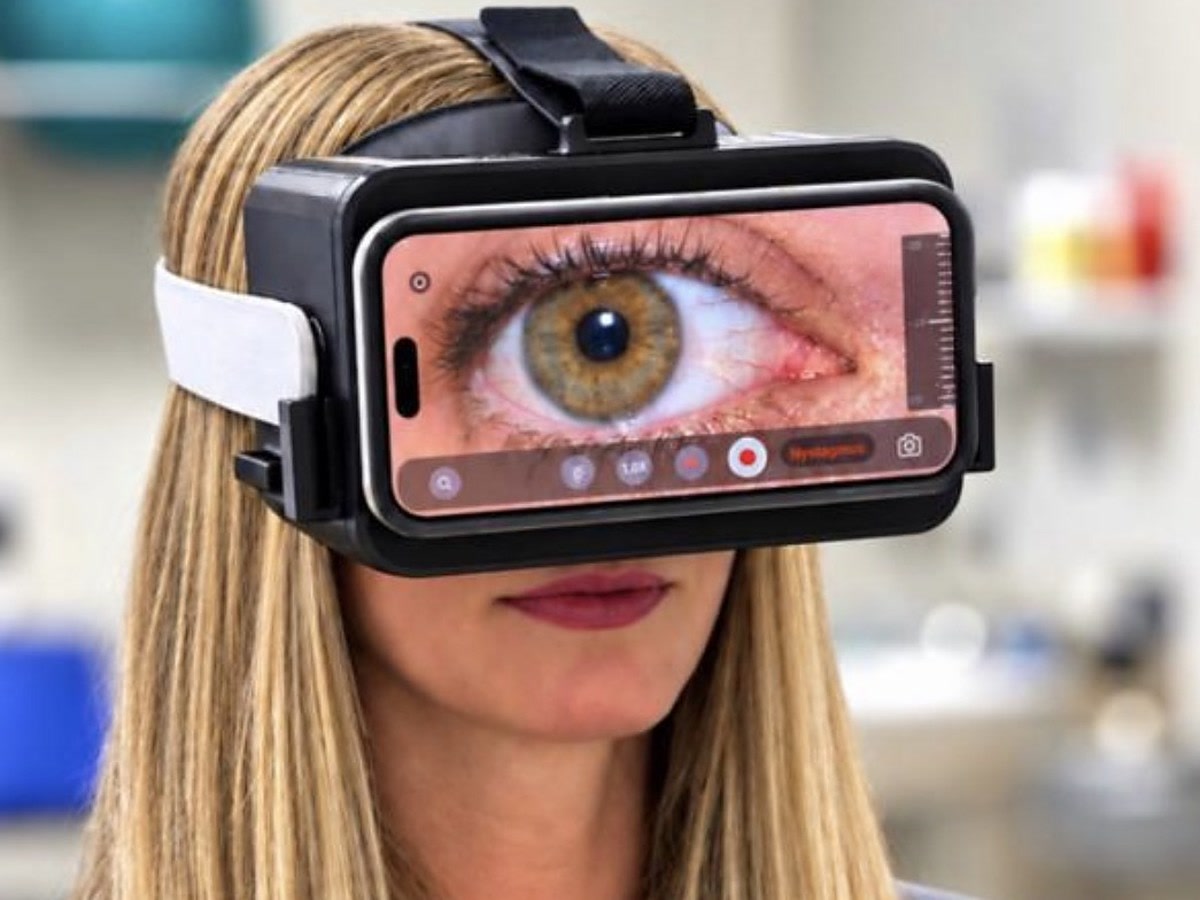
Place the light-occluding SmartVertigo® headset on the patient. Fits comfortably; ready in seconds.
✓ No Infrared Cameras
The first clinical-grade, smartphone-based vestibular point-of-care wearable. Featuring 4K color video and AI-guided nystagmus classification.
See how it works, start to finish.
The SmartVertigo® System is a Class II medical device for use under clinician supervision, cleared 30 July 2026.
Familiar protocols.
Place the light-occluding SmartVertigo® headset on the patient. Fits comfortably; ready in seconds.
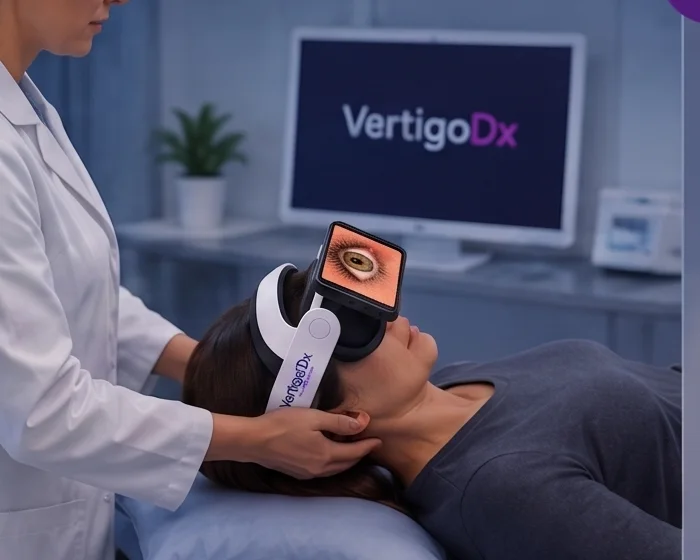
Execute the standard positional tests — Dix-Hallpike, supine roll. Familiar protocols, no retraining required.
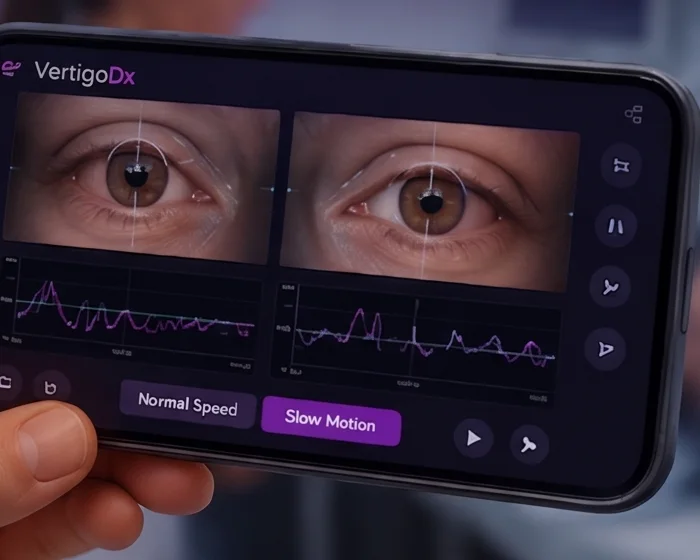
The system records real-time, high-fidelity eye movements via video. Review at speed, in slow motion, or frame by frame — instantly.
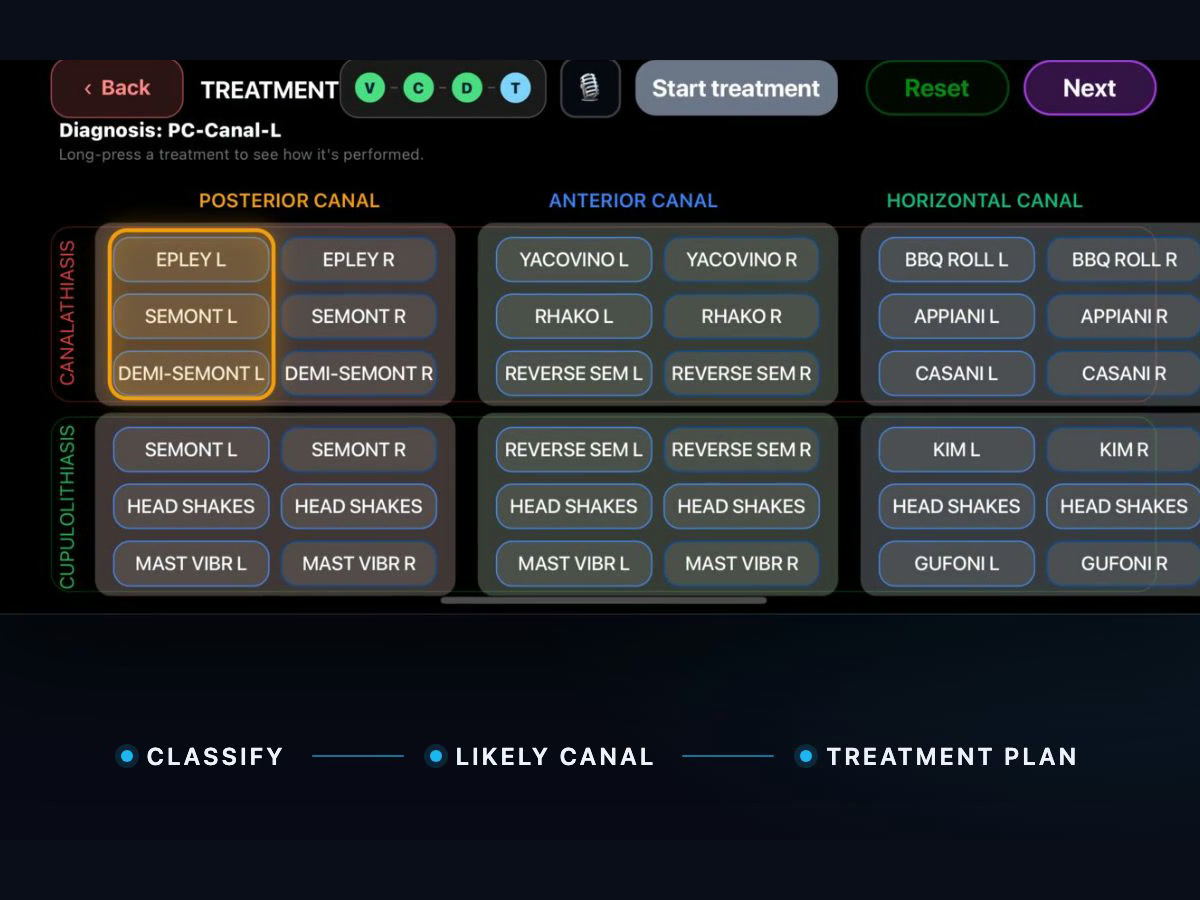 AI
AIFrom capture to canal-specific classification in under 60 seconds at the point of care. All diagnostic and therapeutic decisions remain with the treating clinician.
 Rapid
RapidStreamlined workflows. From patient presentation to a documented recording in minutes.
 Cost
CostTraditional infrared VNG goggles run $3,000 to $50,000+. SmartVertigo® uses the device already in your pocket, paired with a proprietary headset and intelligent app.
 Specialist
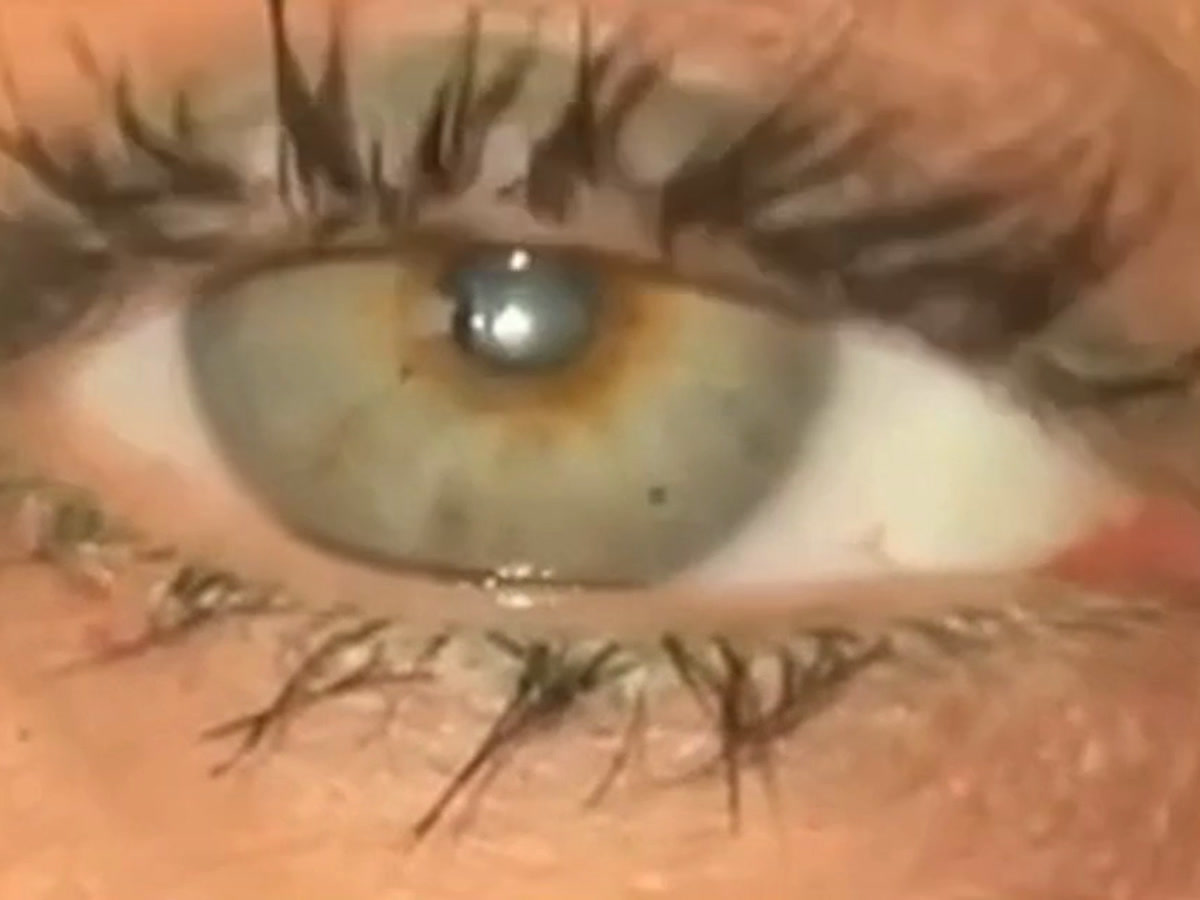
Capture horizontal, vertical, and torsional nystagmus in high resolution. Replay at regular or slow speed to confirm subtle findings.
 4K Color
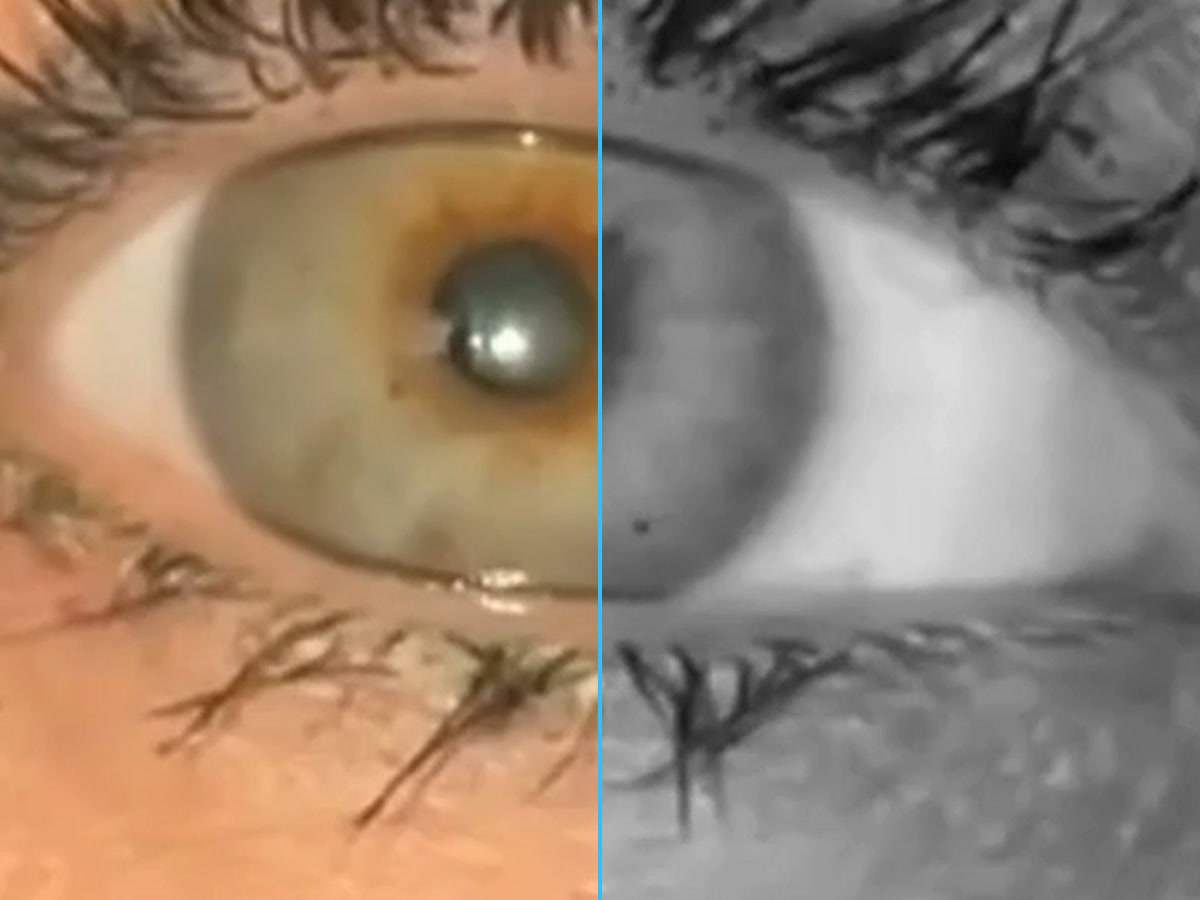
Unlike infrared VOG’s black-and-white video, SmartVertigo® captures full-color video, which may reveal subtle findings, such as vessel movement, that infrared cannot show.
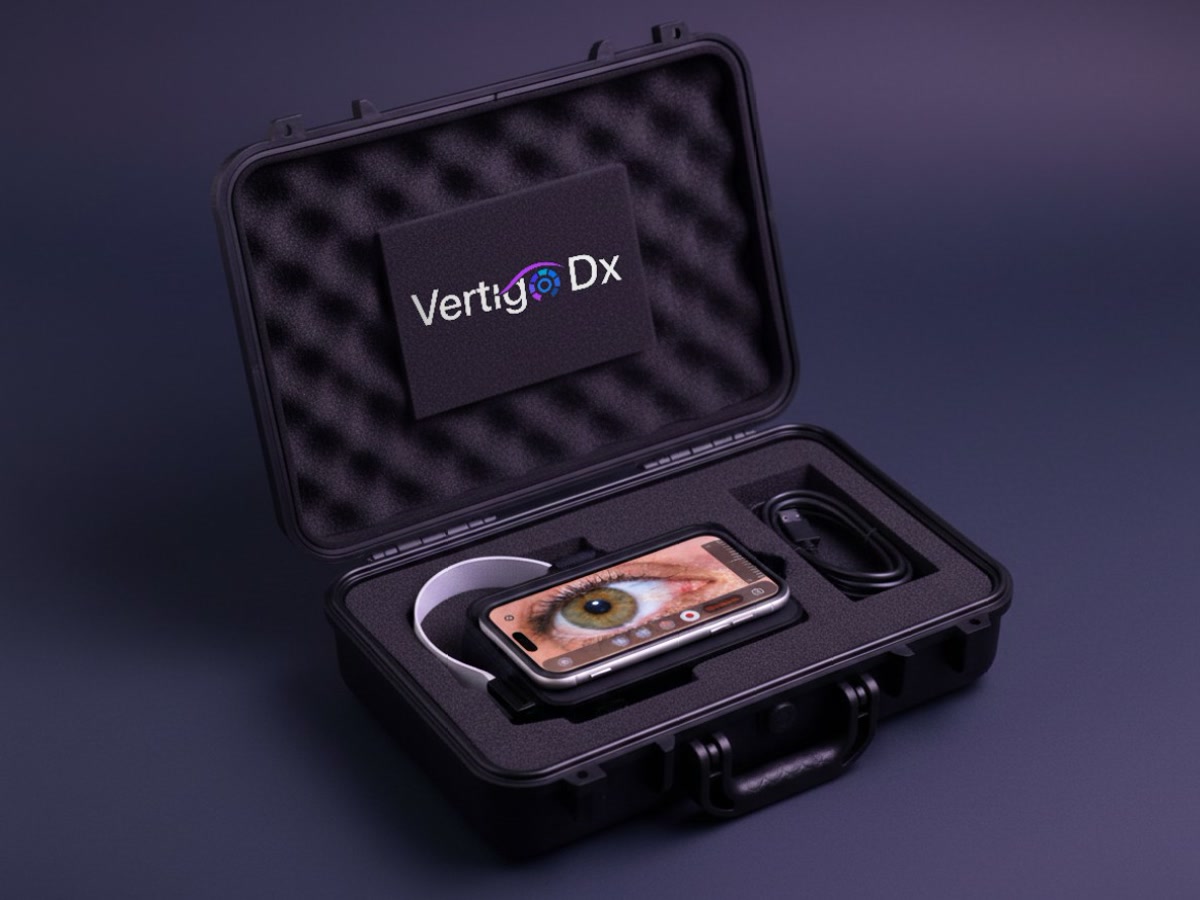 POC
POCFits in a small light carry case. Evaluation and treatment anywhere, anytime.
Are you ready for AI copilot to assist you?
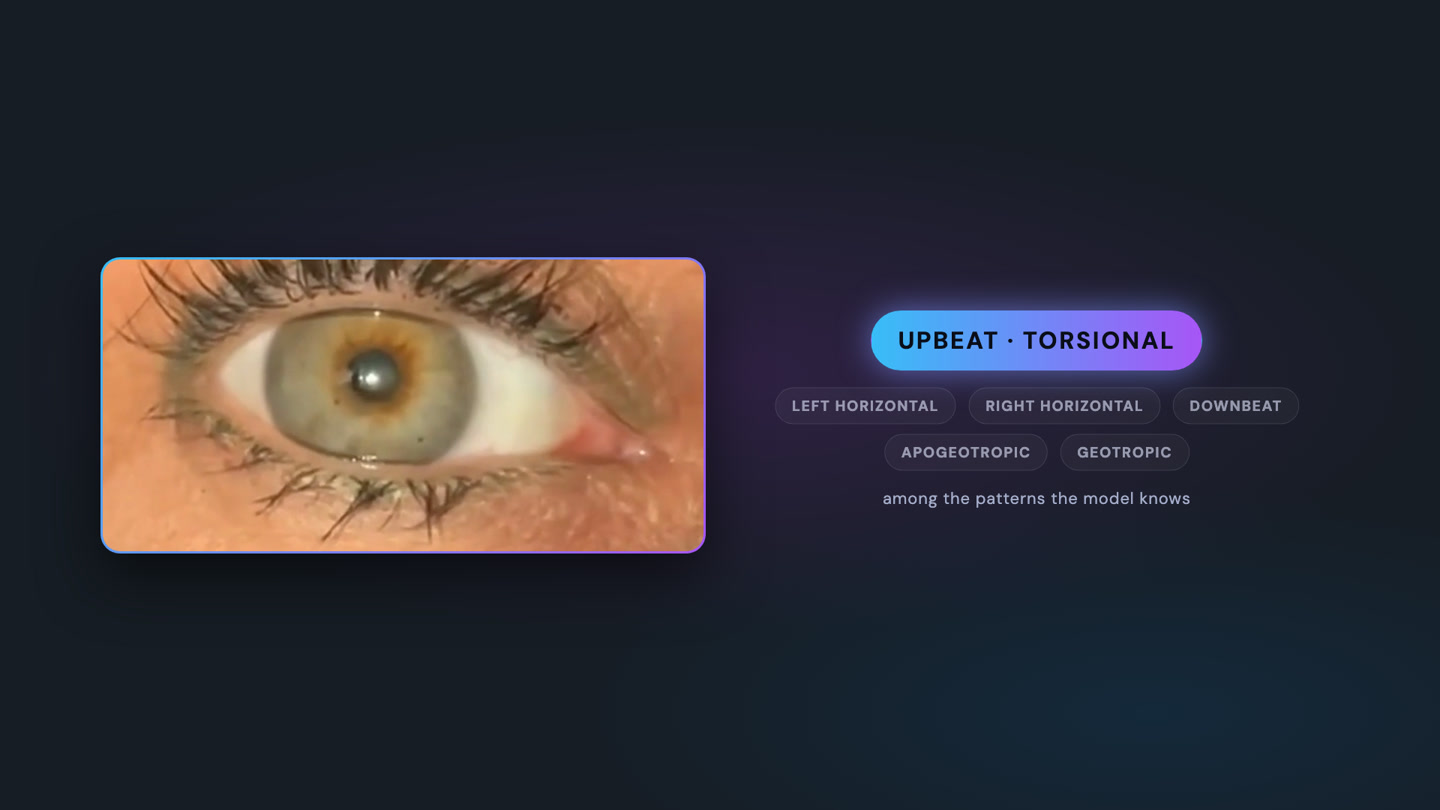 Step 1 — Classify
Identifies the nystagmus pattern — upbeat torsional, left horizontal, and others — using a machine-learning model trained on tens of thousands of clinical data points.
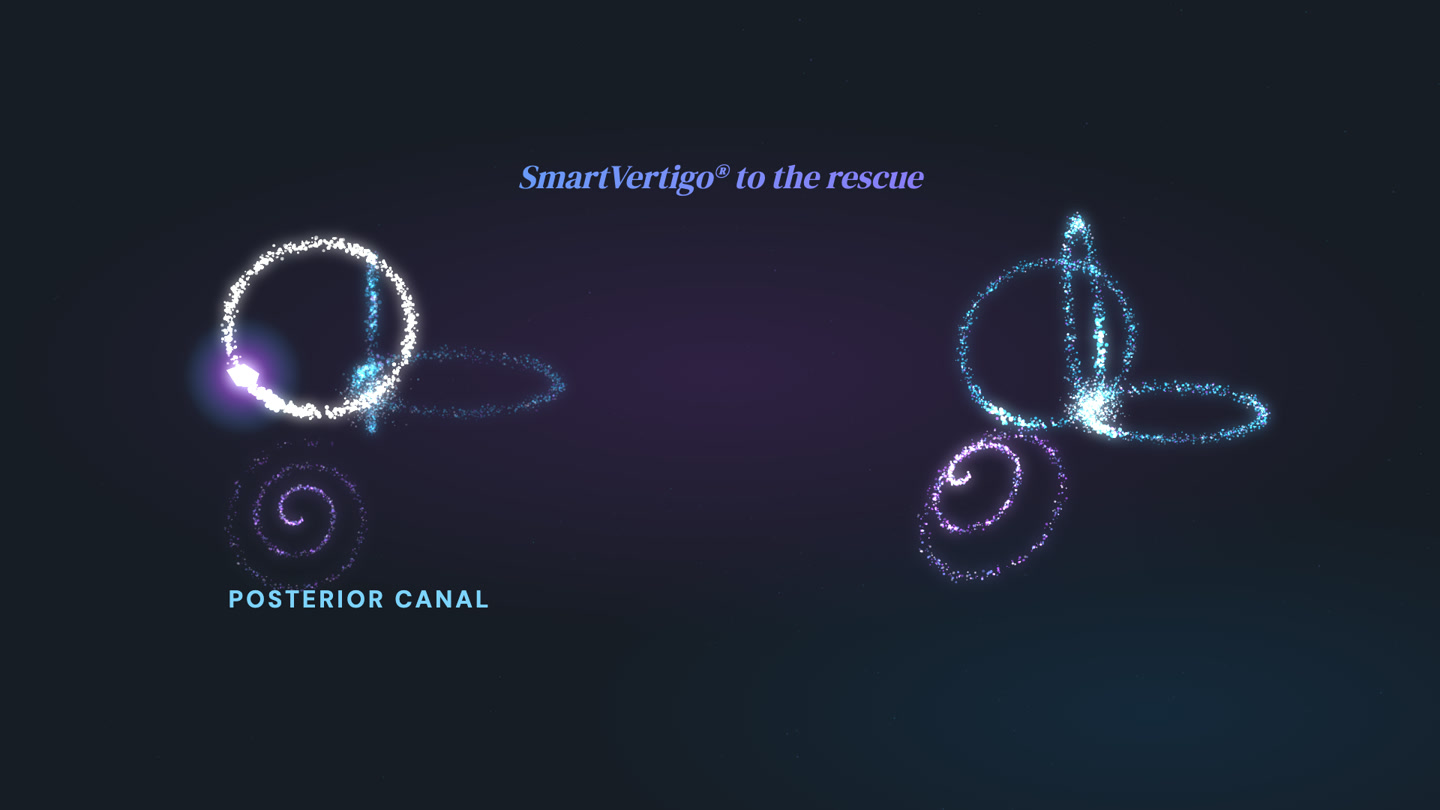 Step 2 — Localize
Suggests the likely affected otolith location from the classified nystagmus pattern, for the clinician to consider.
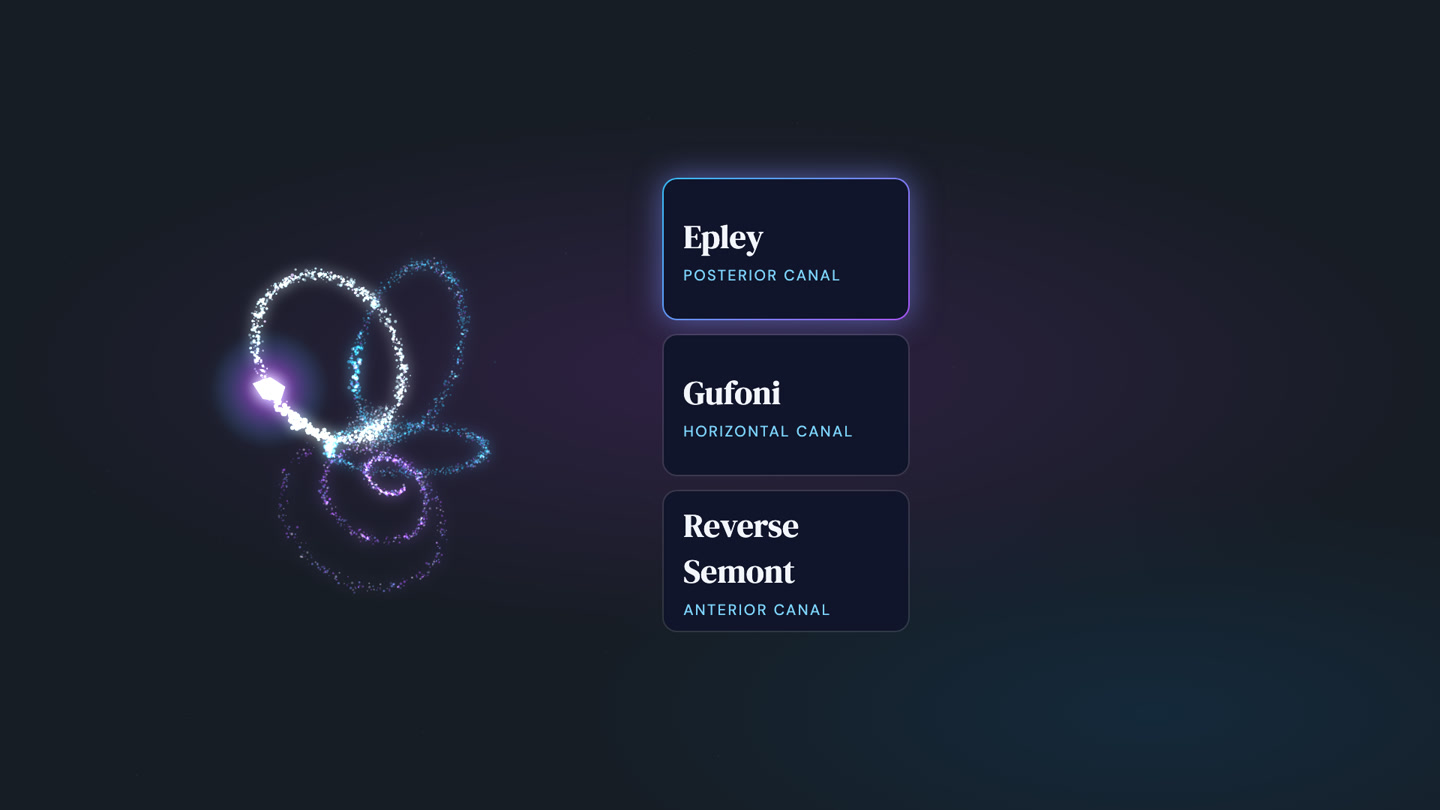 Step 3 — Inform
Presents the repositioning maneuvers associated with that classification — Epley, Gufoni, or Reverse Semont — for the treating clinician to select from.
1. Diagnostic classifications. All diagnostic classifications are made by the treating clinician. SmartVertigo® provides AI-guided assistance for nystagmus classification, based on the classification of vestibular signs and examination techniques set out in the Bárány Society consensus document.1
2. Therapeutic decisions. All therapeutic decisions are made by the treating clinician. SmartVertigo® provides an algorithmic formula that may be used to assist the treating clinician in selecting the optimal therapeutic maneuver. This formula is based on industry-standard maneuver selection and on the diagnostic classifications described in section 1.
All decisions, whether diagnostic or therapeutic, remain the ultimate responsibility of the treating clinician.
1 Eggers SDZ, Bisdorff A, von Brevern M, Zee DS, Kim J-S, Pérez-Fernández N, Welgampola MS, Della Santina CC, Newman-Toker DE. Classification of vestibular signs and examination techniques: Nystagmus and nystagmus-like movements. Consensus document of the Committee for the International Classification of Vestibular Disorders of the Bárány Society. Journal of Vestibular Research. 2019;29(2–3):57–87.
Easily reproducible 3-step process.
SmartVertigo® empowers every clinician — not just the specialist — to objectively capture, classify and document nystagmus with confidence. By combining high-fidelity nystagmus capture with intuitive clinical guidance, we replace the complicated, bulky, expensive vestibular lab with one portable self-contained system. Best of all, you can learn to use it in minutes.
Recorded through the SmartVertigo® headset for clinician review, playback, and documentation.
Whether you’re managing a busy emergency department, running a vestibular PT practice, or evaluating a neurology consultation in the hospital, SmartVertigo® delivers the objective evidence efficiently.
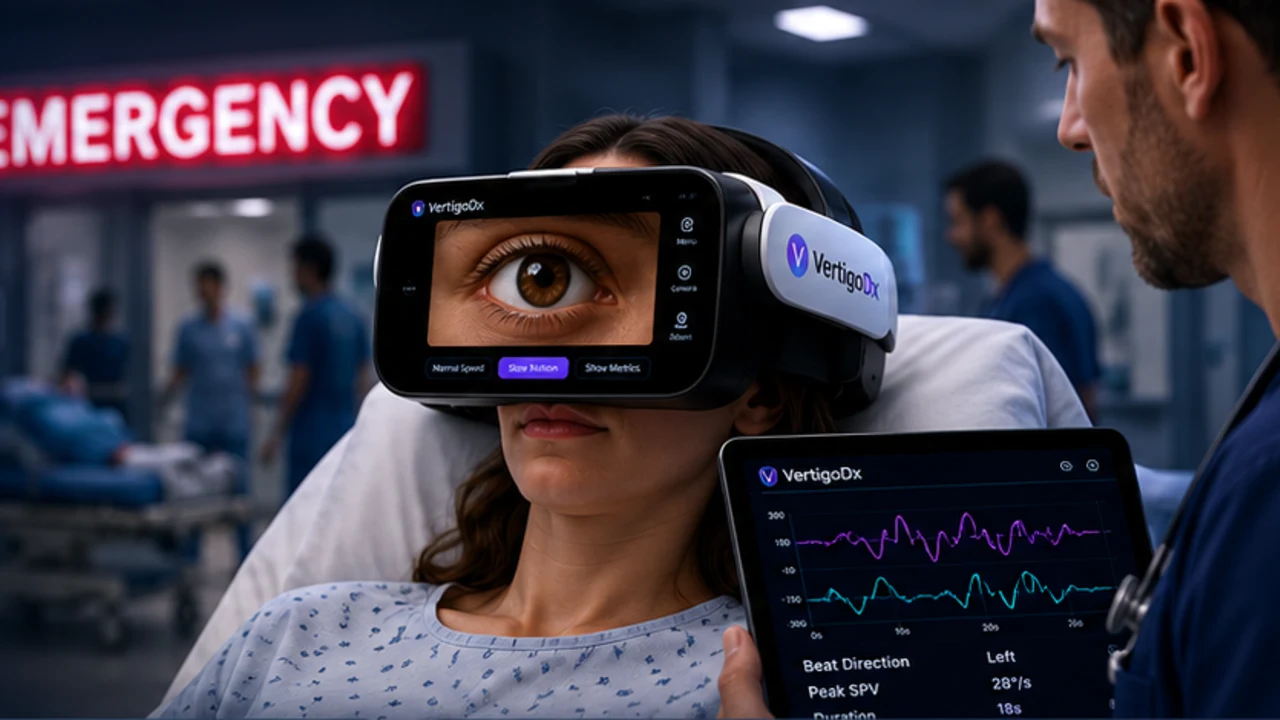
Dizziness is vague. SmartVertigo® isn’t. 35% of ED dizziness patients receive brain imaging⁵ — and 93.1% of those scans come back unremarkable.⁶ Bedside nystagmus recording turns medicine’s most ambiguous presentation into objective, reproducible, documented data. Results within minutes. Once BPPV is confirmed, SmartVertigo® suggests the likely repositioning maneuver — so you’re not relying on memory alone.
Read more →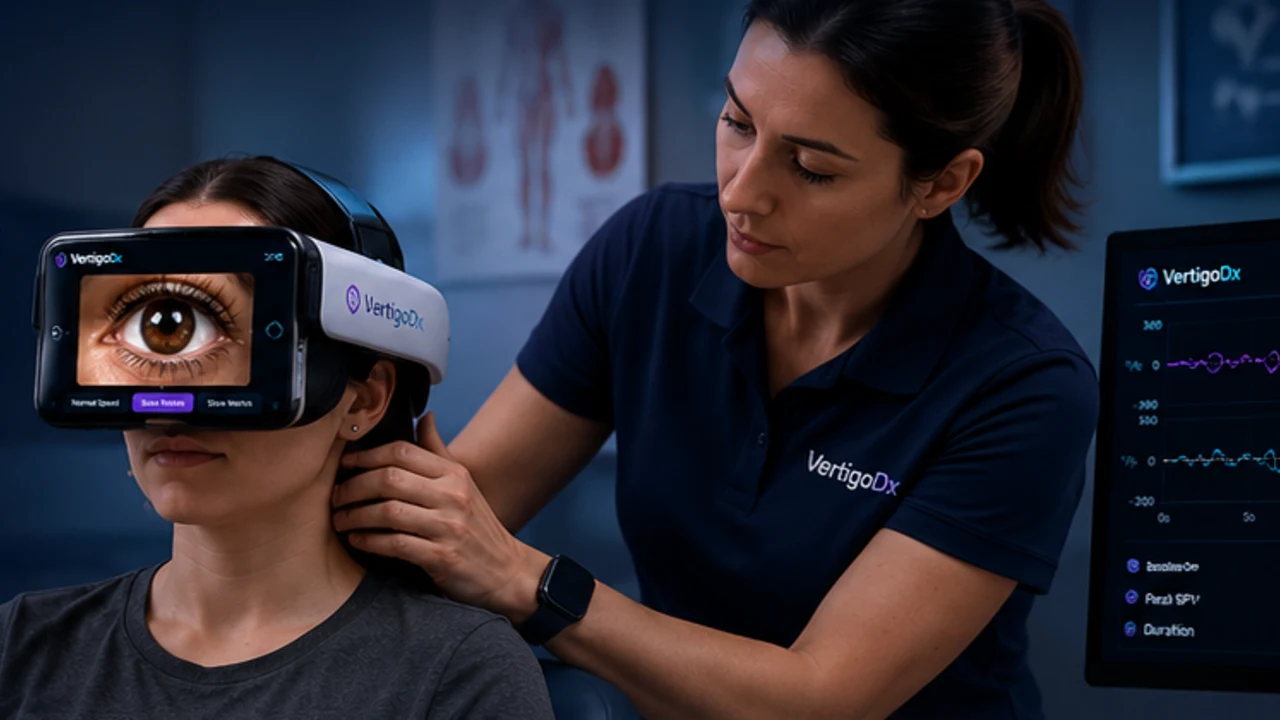
BPPV demands you remember positions, nystagmus patterns, and canal classification. SmartVertigo® handles all of it — guiding you through every step. Confirms the canal. Walks you through the treatment maneuver. No guessing, no reference chart.
Read more →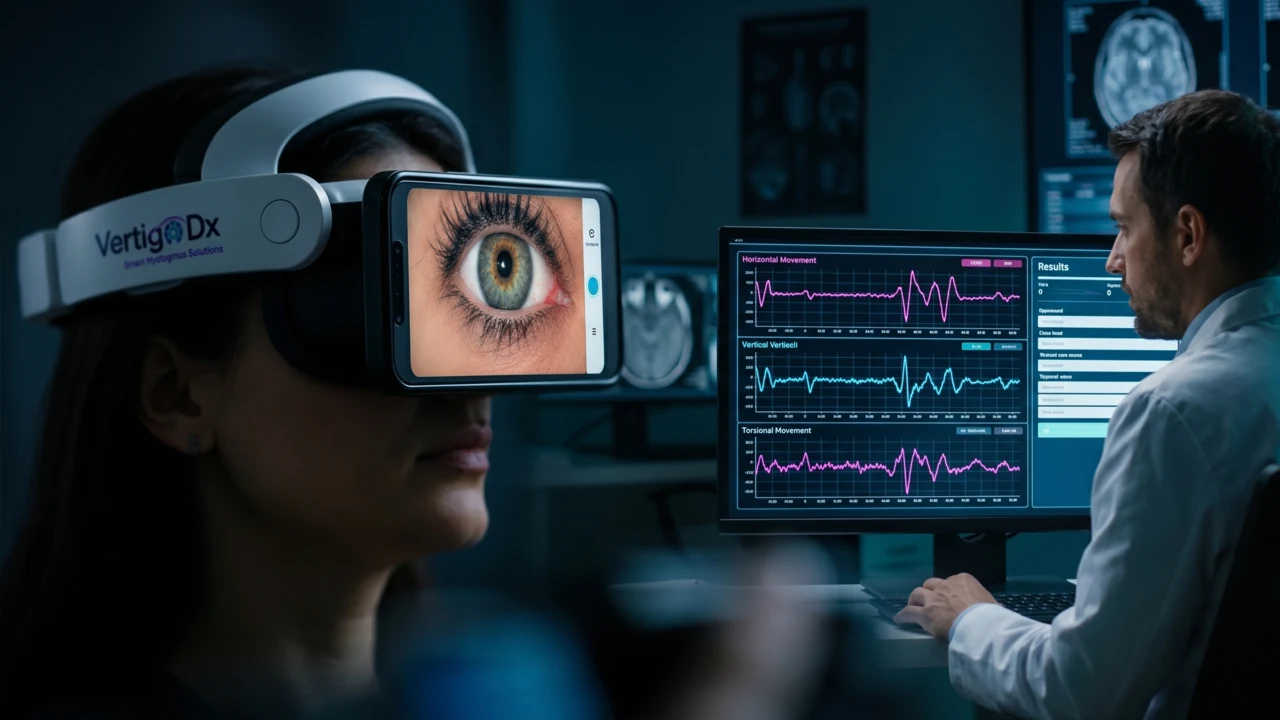
In stroke evaluation, speed is everything — and dizziness remains one of the hardest presentations to call when deciding on administering thrombolytics. SmartVertigo® puts objective, documented nystagmus recording in your hands at the bedside. Faster decisions. A defensible record every time.
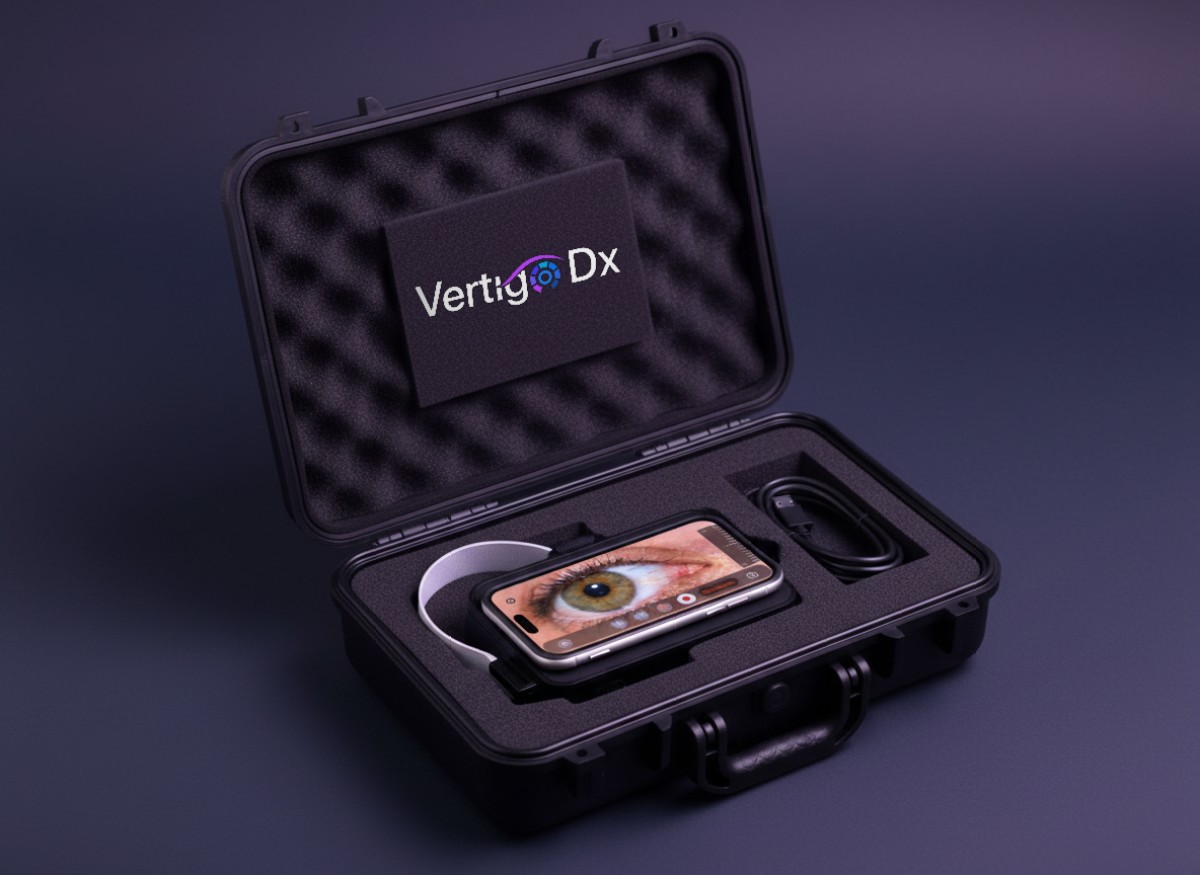
Read more →This mini vestibular lab fits in a small, light portable case — so it goes with you. For the mobile PT, or the concierge clinician performing an in-home visit, SmartVertigo® unlocks a category of care that was previously impossible outside a hospital or specialty clinic.
The entire system — headset, smartphone interface, and proprietary app — fits into a single durable travel case. One operator. No infrastructure required at the point of delivery.
An assessment device is only as valuable as the workflow around it. SmartVertigo® is built end-to-end to translate clinical observations into documentation, billing, longitudinal care, and patient engagement.
Replay at variable speeds to confirm what the naked eye misses.
A true clinical timeline. Every visit recorded and accessible on the VertigoDx portal — canal involvement, treatment response, and recurrence, all in one place.
Export comprehensive, formatted reports directly into the chart — no copying, no transcription, no missing documentation. Less time on charts. More time on patients.
Captured eye-movement sequences serve as objective data supporting applicable CPT vestibular function and repositioning codes — including evaluation codes 97161-3, re-evaluation codes 97164, neuromuscular codes 97112, therapeutic activities 97530, and canalith repositioning 95992.*
Let patients see what you see. Showing real nystagmus footage turns a confusing diagnosis into something patients can understand, follow, and trust.
A contemporaneous, reproducible record that objectively corroborates every clinical decision.
Everything the infrared goggle does, plus five things it can’t — at a fraction of the cost.
| Feature comparison | Frenzel Goggles | Infrared Goggles | SmartVertigo® |
|---|---|---|---|
| Affordable | ✓ | ~ | ✓ |
| Fully portable & wireless | ✓ | ✗ | ✓ |
| True point-of-care | ✓ | ✗ | ✓ Exclusive |
| Clear magnification eye capture | ✗ | ✗ | ✓ Exclusive |
| Unlimited replays | ✗ | ✓ | ✓ |
| Track patient progress with side-by-side videos | ✗ | ✗ | ✓ Exclusive |
| AI-guided nystagmus classification | ✗ | ✗ | ✓ Exclusive |
| Seamless EMR integration | ✗ | ✗ | ✓ Exclusive |
| Reproducible record | ✗ | ~ | ✓ |
✓ Available · ~ Partial / limited · ✗ Not available · Exclusive = SmartVertigo® only. *CPT coding and reimbursement are the responsibility of the treating provider and are not guaranteed by VertigoDx.
SmartVertigo® is currently being validated in an IRB clinical study.
Request a demo, ask a clinical question, or explore enterprise and federal licensing. Our team responds within one business day.
SmartVertigo® is patent pending, including a worldwide PCT patent application and related provisional patent filings.
SmartVertigo® is FDA 510(k) cleared under K260566, granted 30 July 2026. It is a prescription-use device intended for use by licensed healthcare professionals.