See the eye, one frame at a time. Then the report.
Replay any recording at a tenth of its speed and step through it frame by frame. Then a letterheaded report, a referral or a patient summary from the same visit — and the progress across visits, position by position.
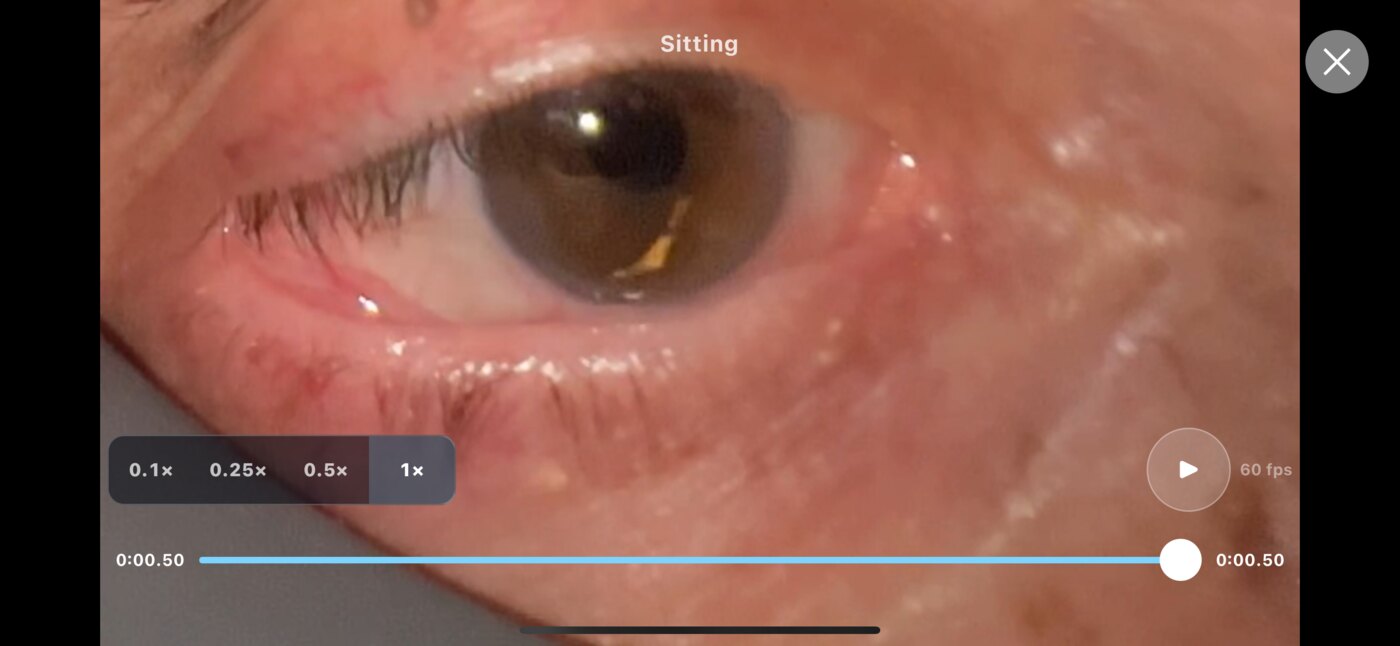
Torsion, one frame at a time.
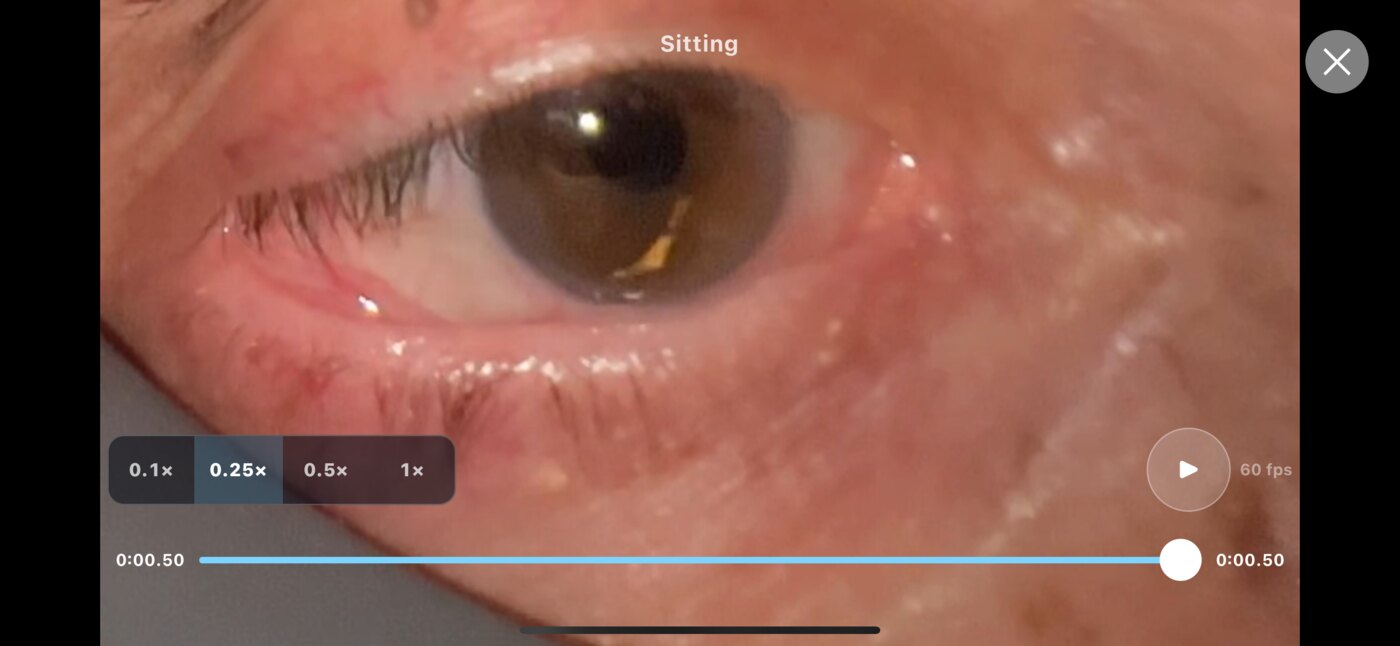
At 0.1× a torsional beat is readable. With frame stepping on the portal it is countable. The patient can watch their own eyes and understand what nystagmus is, on the spot.
The handset player offers 0.1×, 0.25×, 0.5× and 1× and shows the clip’s frame rate; the portal’s player adds single-frame stepping. Both remember the speed per person. This clip is the site’s existing Dix-Hallpike eye recording.
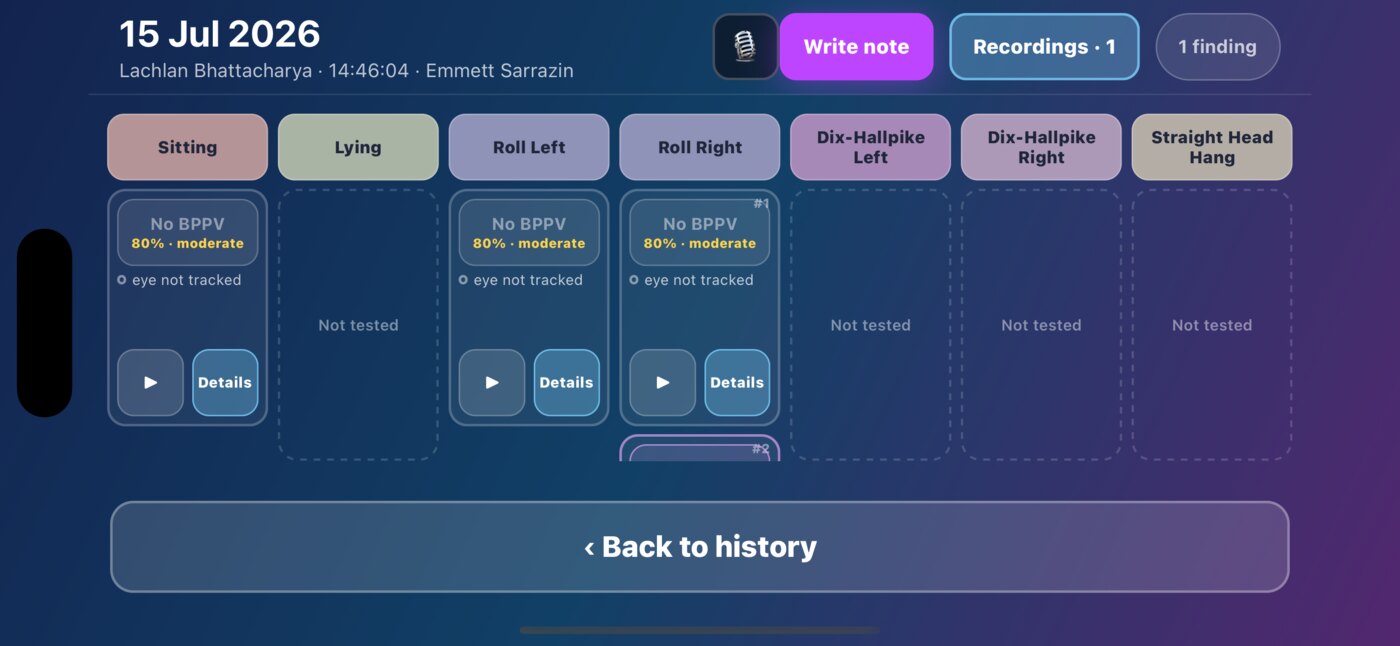
Eleven documents, one visit.
Clinic logo, clinician profession and registration number, a report number per visit, the seven-position findings table, a coding line, and a sign-off. Rendered through one page engine and checked page by page, so there are no blank pages and no split rows.
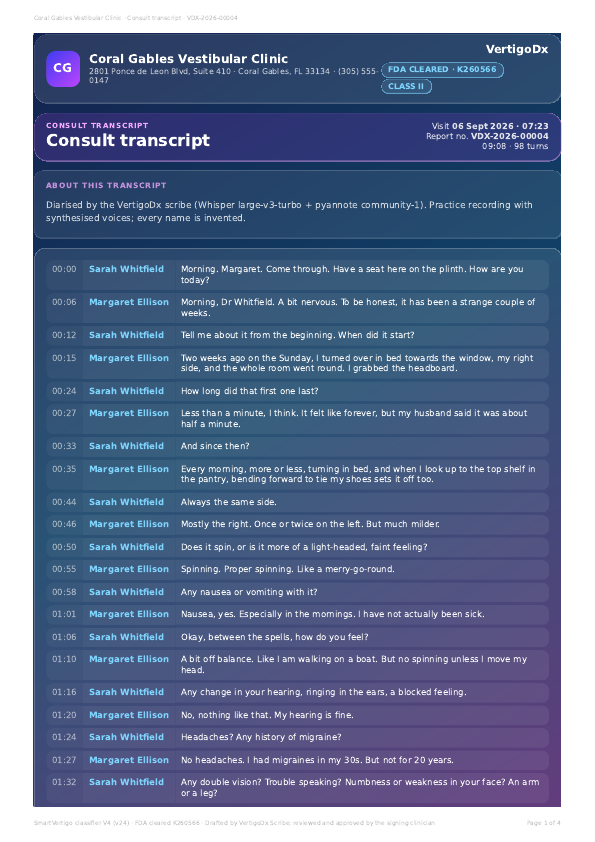 Consult transcriptOpen PDF ↗
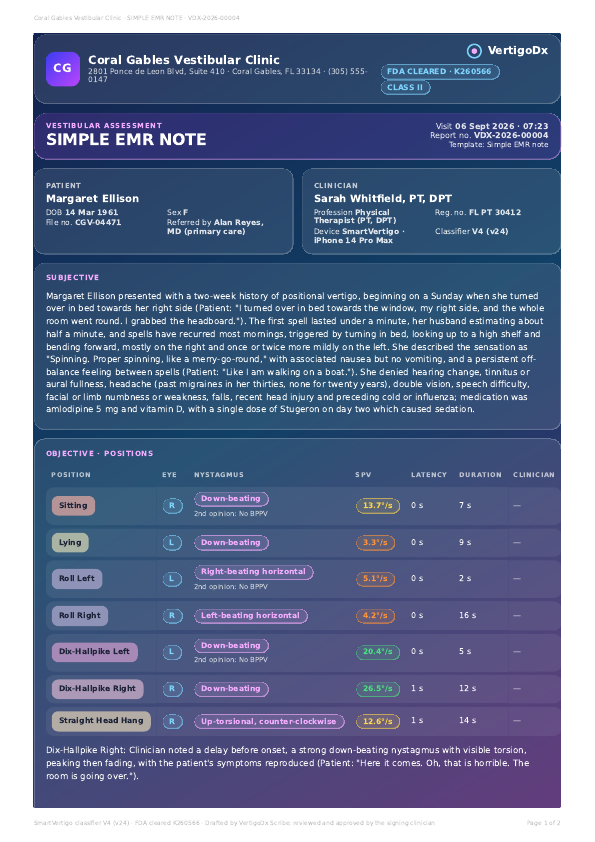 Simple EMR noteOpen PDF ↗
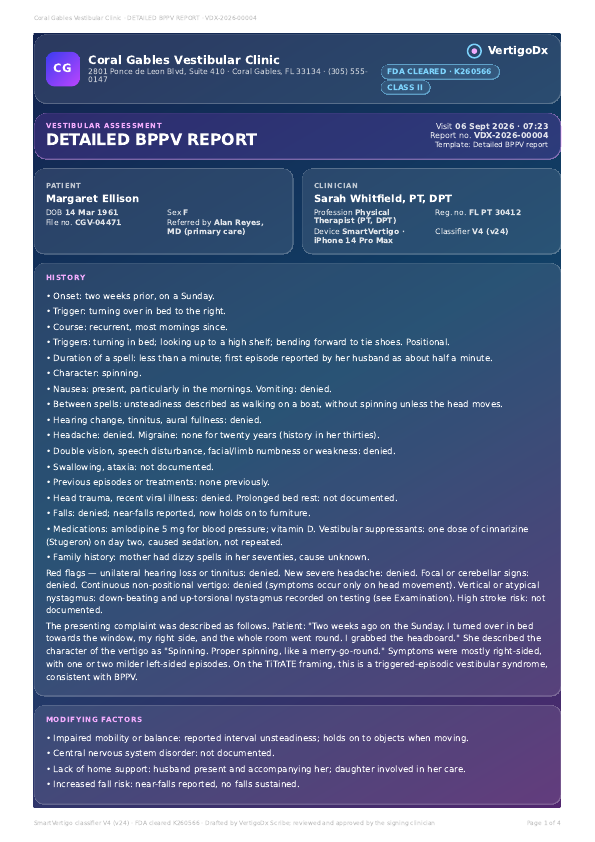 Detailed BPPV reportOpen PDF ↗
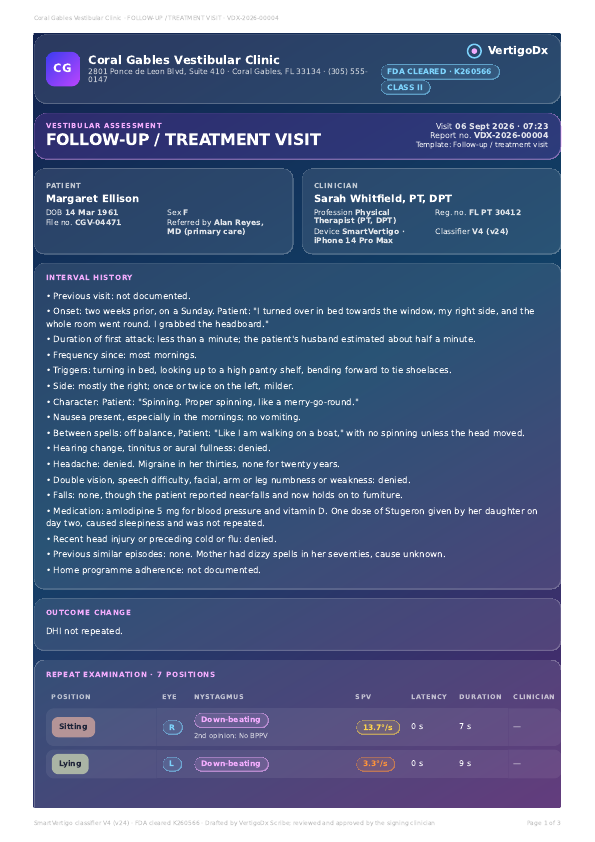 Follow-up / treatment visitOpen PDF ↗
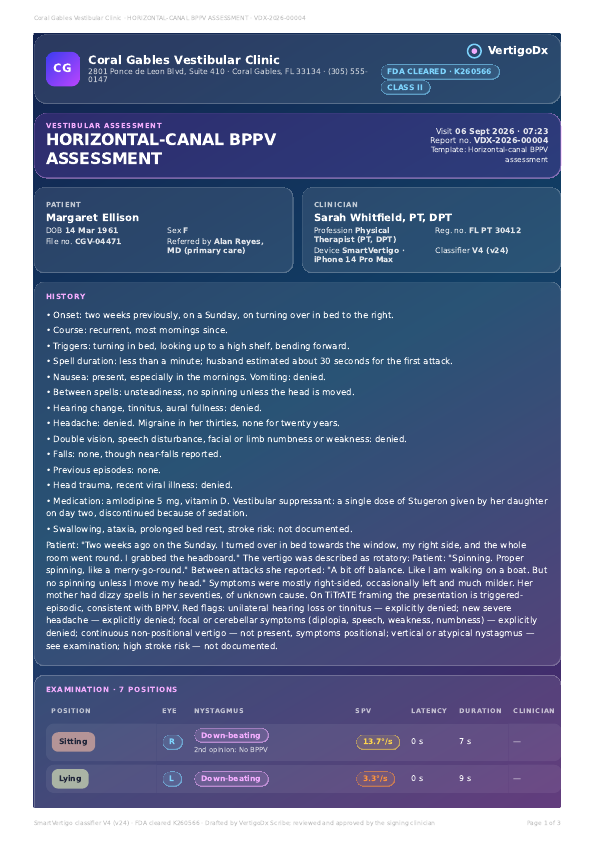 Horizontal-canal BPPV assessmentOpen PDF ↗
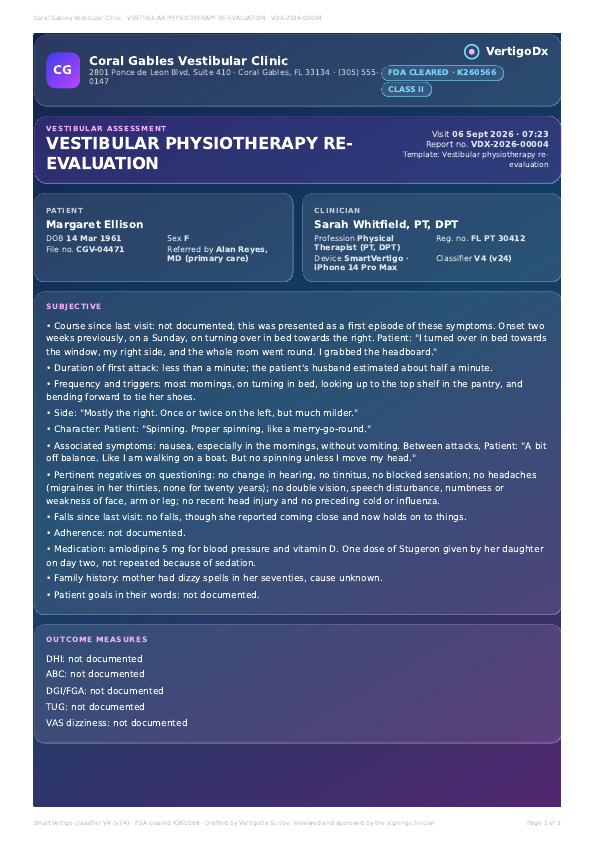 Vestibular physiotherapy re-evaluationOpen PDF ↗
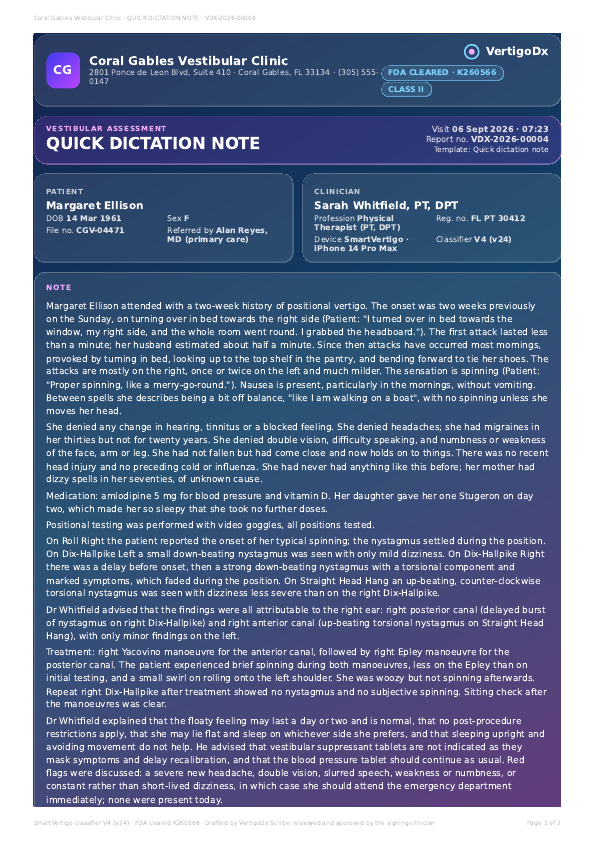 Quick dictation noteOpen PDF ↗
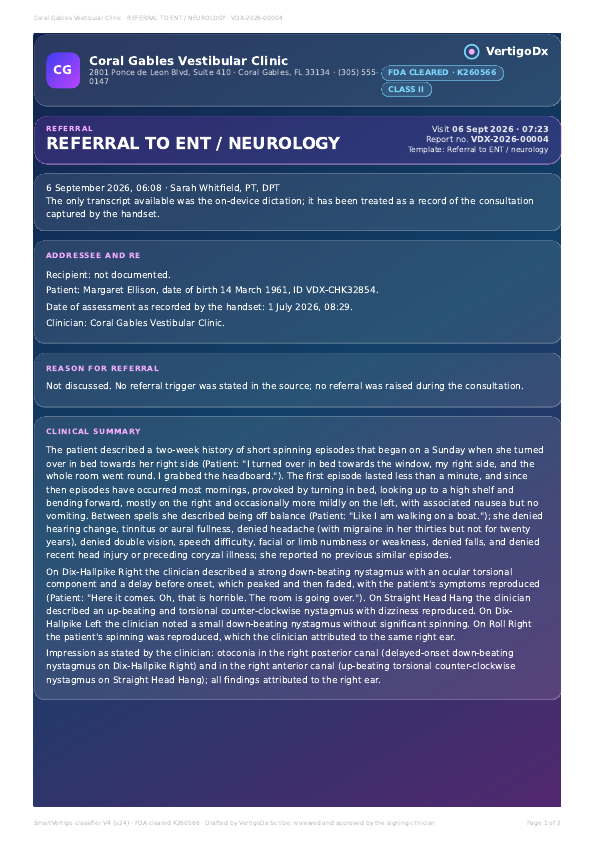 Referral to ENT / neurologyOpen PDF ↗
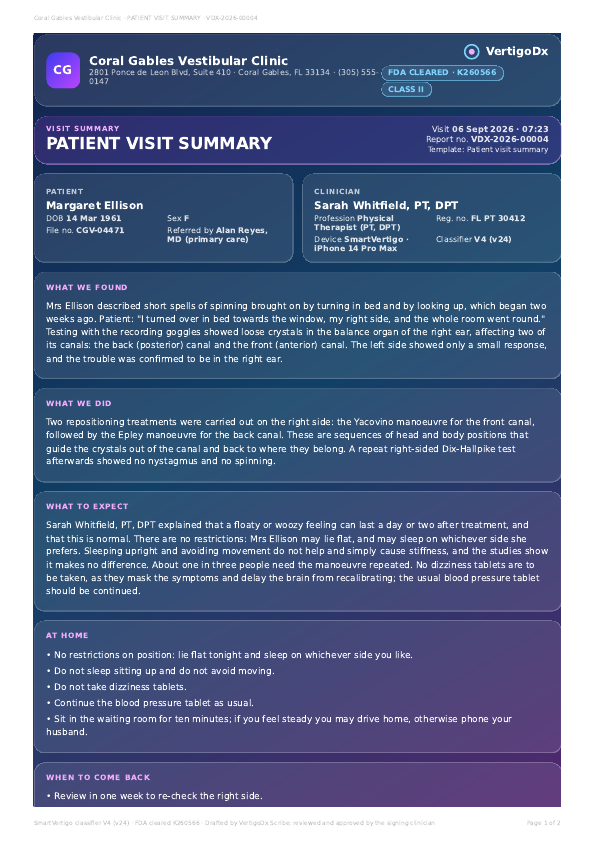 Patient visit summaryOpen PDF ↗
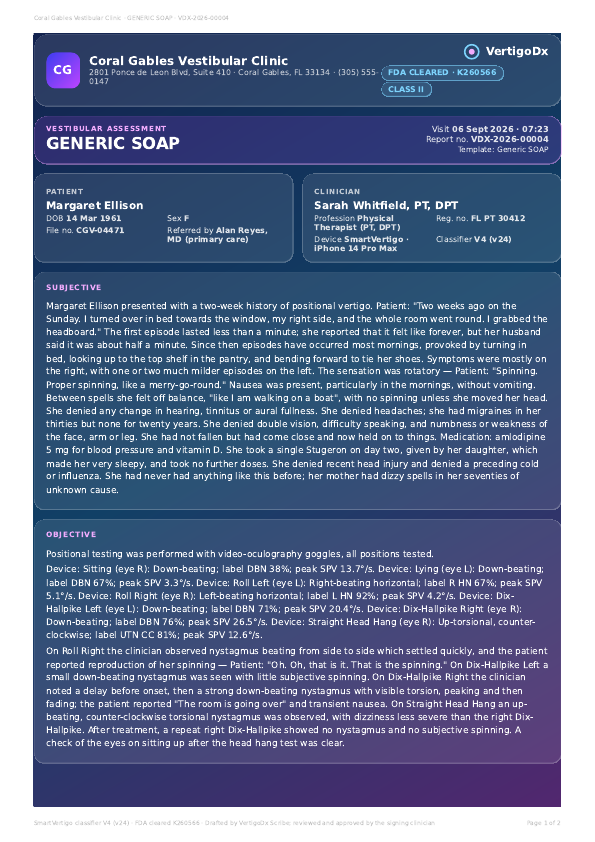 Generic SOAPOpen PDF ↗
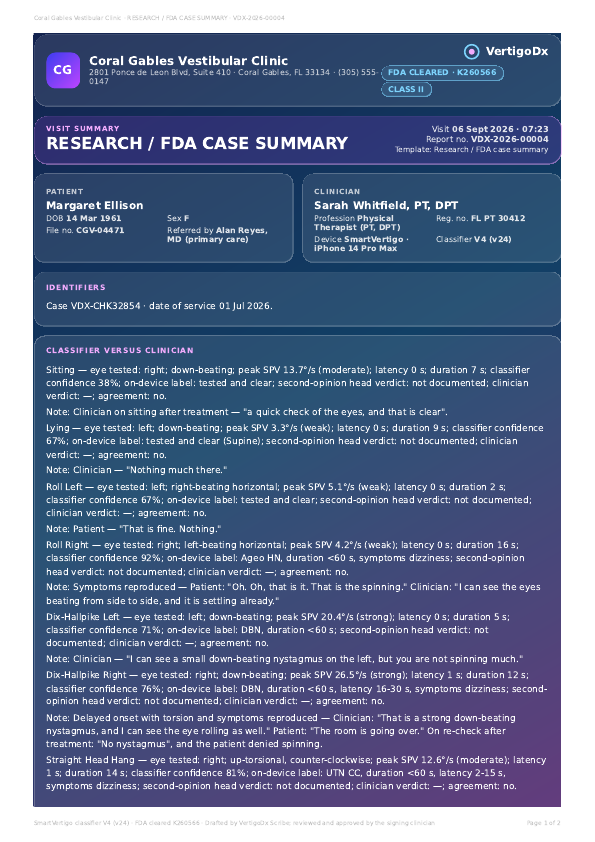 Research / FDA case summaryOpen PDF ↗
One practice visit, ten note types and the transcript. Every name, address and registration number on these documents is invented.
What changed, position by position.
Today against last time, today against the first visit, or the full history. The report puts the measured numbers beside the clips, per position, on the letterhead.
Peak slow-phase velocity, °/s, per position, visit over visit
8 positions · 68 beats · amplitude 4.8° · 1.11 Hz
7 positions · 25 beats · amplitude 1.4° · 0.00 Hz
3 positions · 29 beats · amplitude 2.6° · 1.43 Hz
Tracks and displays across visits, no outcome claim. Degrees are estimated from eye geometry (no headset calibration). Numbers from a de-identified sample, patient renamed.