Versatile by design.
From emergency triage to balance rehab, audiology, and neurology — SmartVertigo® fits the workflow of every department that sees dizziness.
From complexity to clarity — finally.
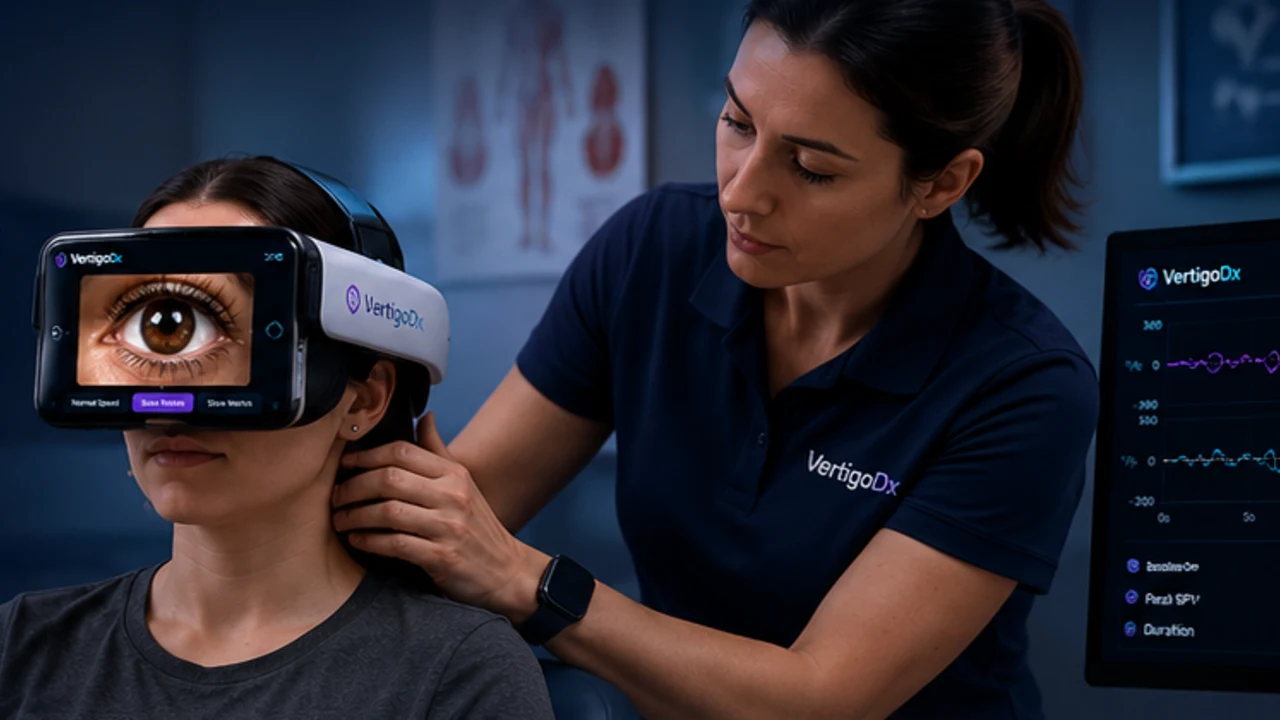
From posterior, lateral, to anterior canals — document canalithiasis and cupulolithiasis findings with precision. Confirm canal involvement before you maneuver, and document what you found. Track resolution across visits and bill all applicable CPT codes with confidence-backed documentation.
- Canal-specific confirmation. Visualize even the subtle torsional, horizontal, and vertical nystagmus to differentiate posterior, lateral, and anterior canal involvement before maneuvering. Accurate identification of the affected canal supports better clinical outcomes — maneuvers based on visual evidence.
- Visit-over-visit progression. Side-by-side replay across sessions — demonstrate objective resolution to patients, payers, and referring providers.
- Patient engagement. Show patients their own eye movements — a visual that makes what you found easy to explain and drives home-program adherence.
Extend the vestibular booth — without buying another one.
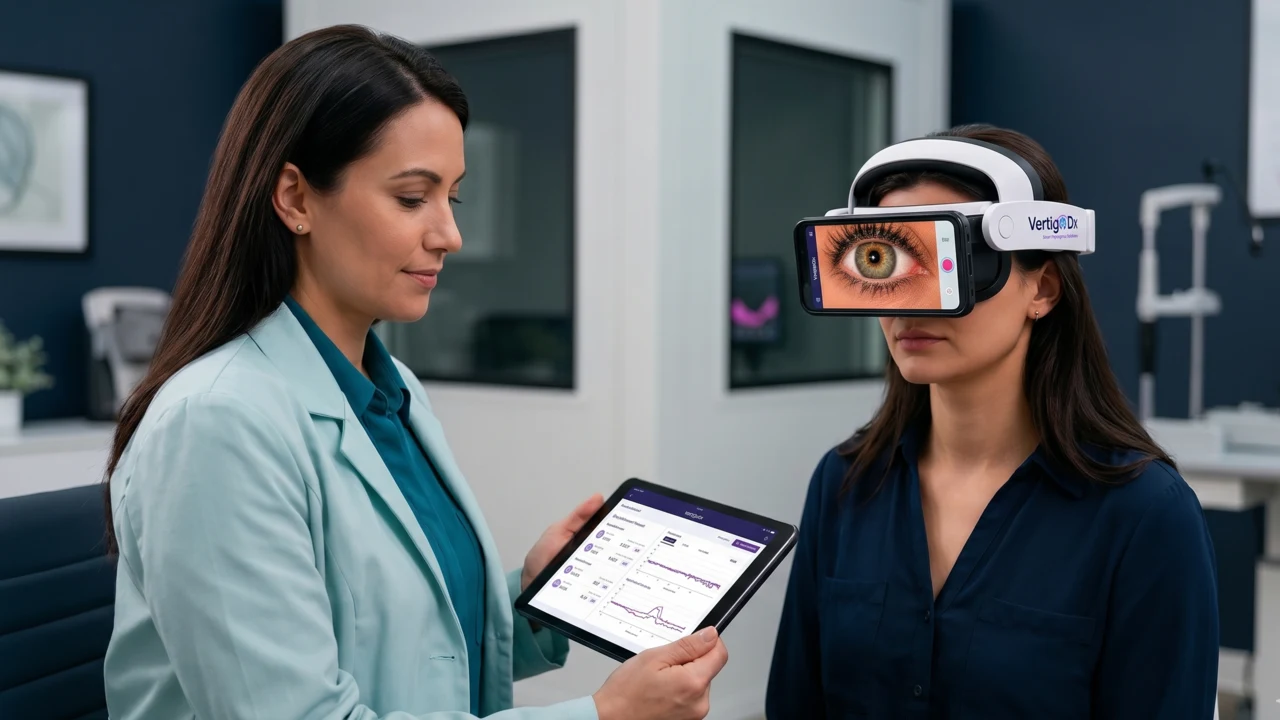
Add a portable, oculomotor-grade assessment to complement your existing VNG and vHIT workflows. Ideal for satellite locations, bedside testing, or high-throughput screening days where a full booth isn’t practical.
- Complement existing VNG. Designed to interoperate with established audiology workflows. PDF reports format alongside your VNG and vHIT records.
- Mobile vestibular footprint. Run nystagmus capture in any exam room or remote clinic site — no fixed lab, no dim-room requirement.
- Quick-screen triage. Triage referrals into “needs full battery” vs. a focused, sub-5-minute oculomotor screen.
Triage dizziness with confidence.
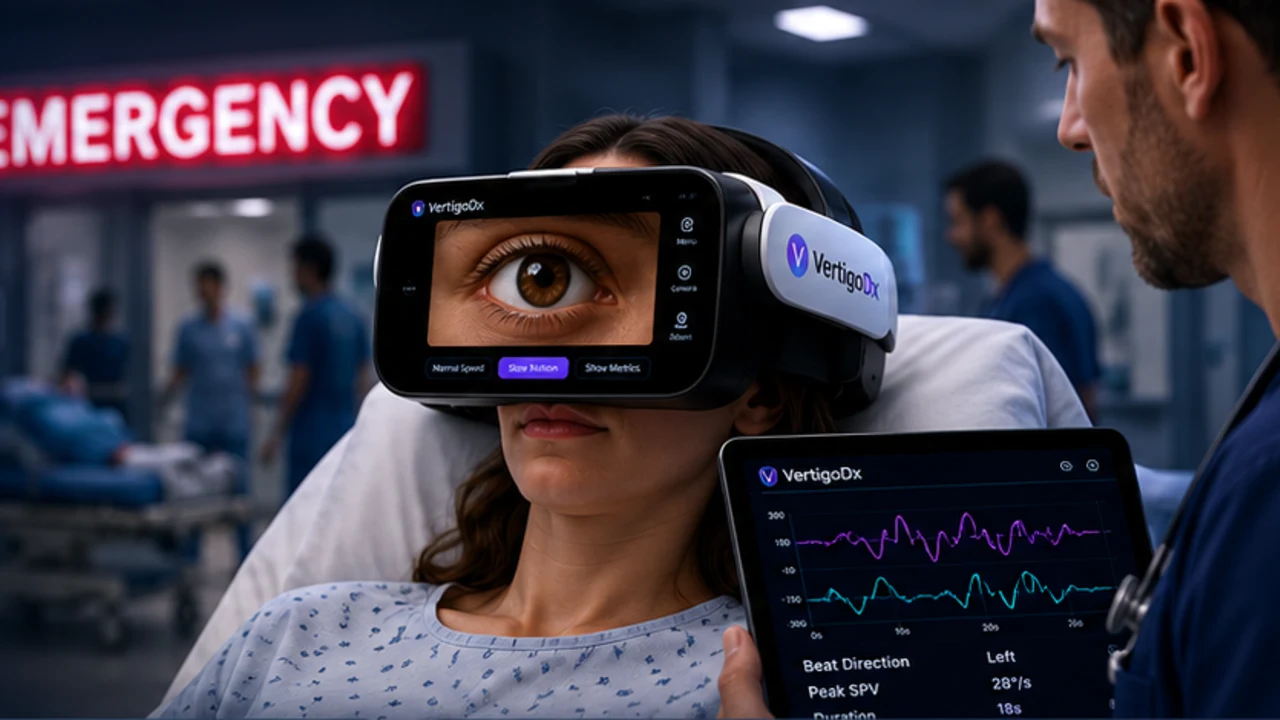
In the ED, acute vertigo routinely generates expensive imaging that rarely changes management — and a chart with nothing objective to support the disposition. SmartVertigo® provides verified nystagmus capture at the bedside — supporting disposition decisions and generating a durable, contemporaneous data element for the chart.
Why is there a diagnostic gap in the ED? Approximately 35% of patients presenting to the ED with dizziness receive brain imaging (Adams et al., JAMA Otolaryngol Head Neck Surg, 2022), and 93.1% of those CT scans come back unremarkable (Masood et al., Cureus, 2024).
- Bedside, POC. Out of the case and capturing nystagmus in a few minutes. Where neuroimaging falls short, SmartVertigo® delivers defensible answers at the bedside to support therapeutic and disposition decisions.
- Medicolegal record. Objective, contemporaneous, reproducible eye-movement documentation — corroborating clinical decisions at the point of care.
Distinguish peripheral from central — fast.
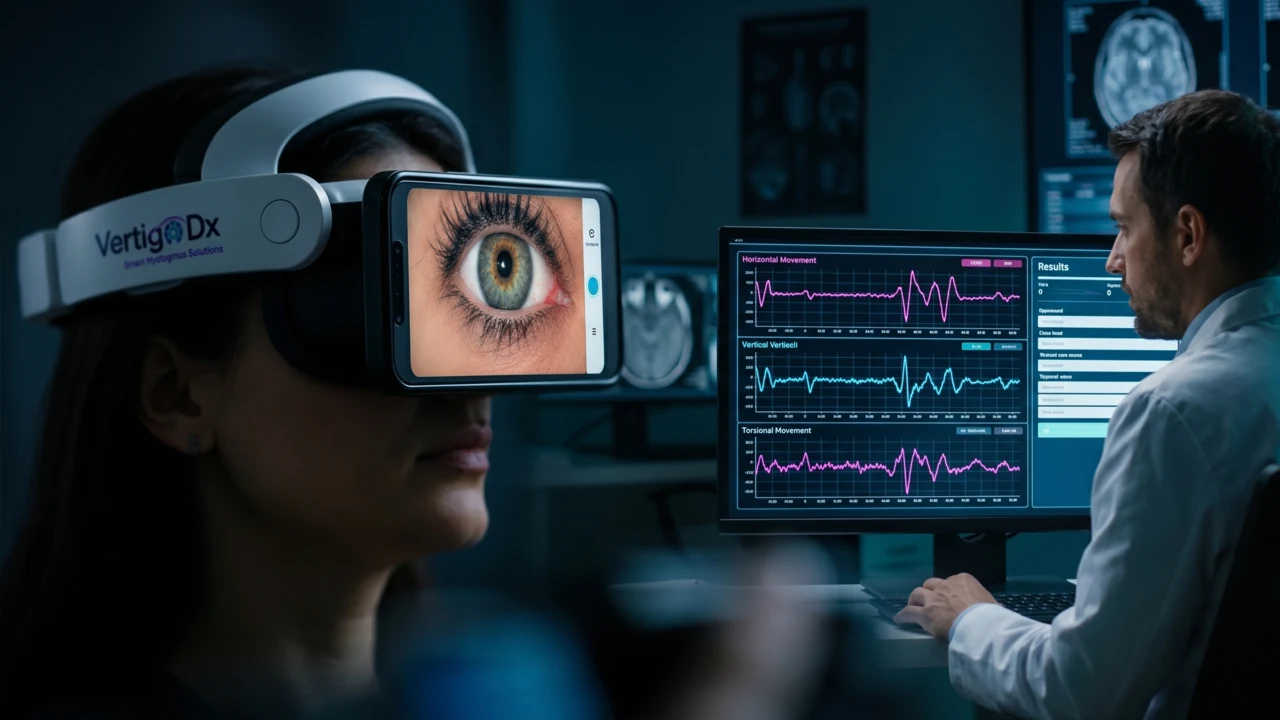
An objective platform for documenting, replaying, and longitudinally tracking nystagmus patterns. Generate a high-fidelity eye-movement record for every encounter and replay subtle torsional or direction-changing findings at controlled speed.
- Central pattern detection. Capture and replay direction-changing, gaze-evoked, and torsional findings — the features that flag central pathology — at variable speed.
- Longitudinal tracking. Episodic vertigo, vestibular migraine, and post-concussion follow-up benefit from objective serial recordings rather than clinician recall.
- Evidence based. Practice guidelines recommend therapeutic maneuvers and advise against routine use of vestibular suppressants, such as meclizine.
Bring the vestibular lab to your point of care.
Request a demo, ask a clinical question, or explore enterprise and federal licensing. Our team responds within one business day.