The note writes itself. You still sign it.
A vestibular scribe on the phone you already examine with. It records the consult, names who said what, and drafts one of ten BPPV notes, every sentence traceable to the words or the finding it came from.
Words in. A note out.
Two people talk. The words flow into the phone. Out comes a transcript that knows who said what, a template is chosen, and the document comes out the other side.
One consult, start to signed.
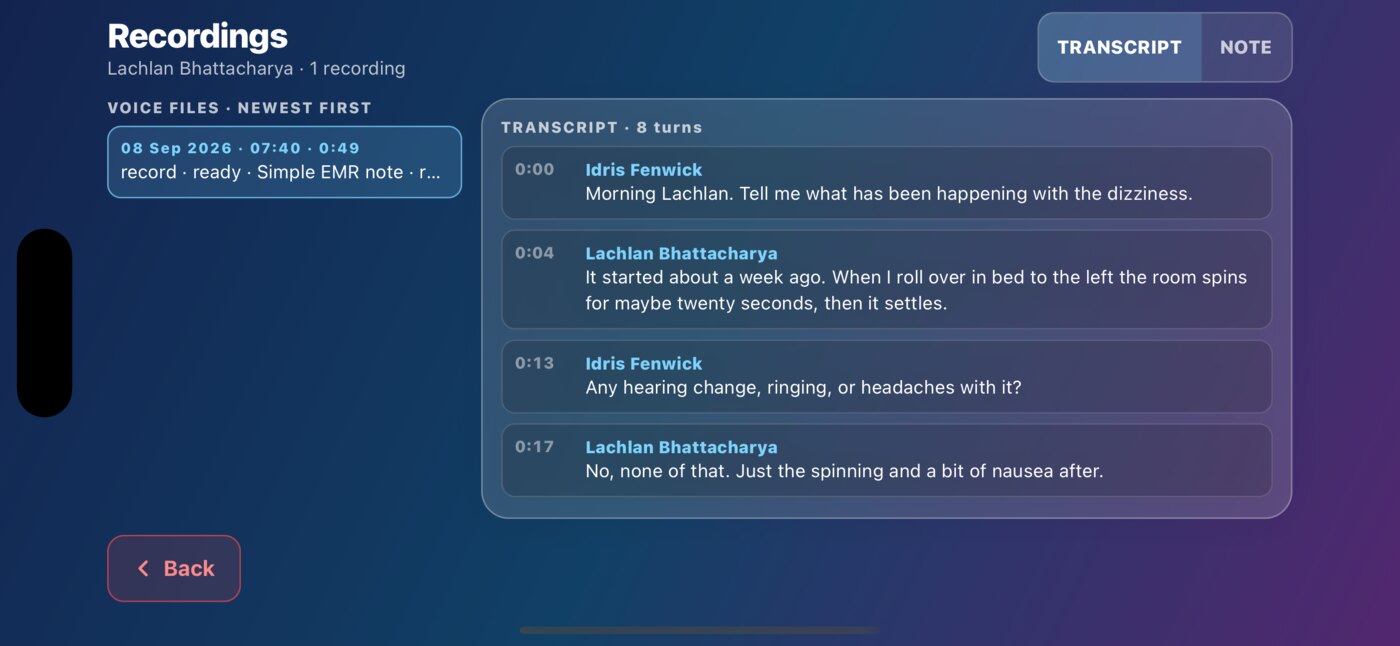
A practice consult run through the real pipeline. Press play: the transcript fills as the words are spoken, and the note’s sentences arrive as the words they come from are said.
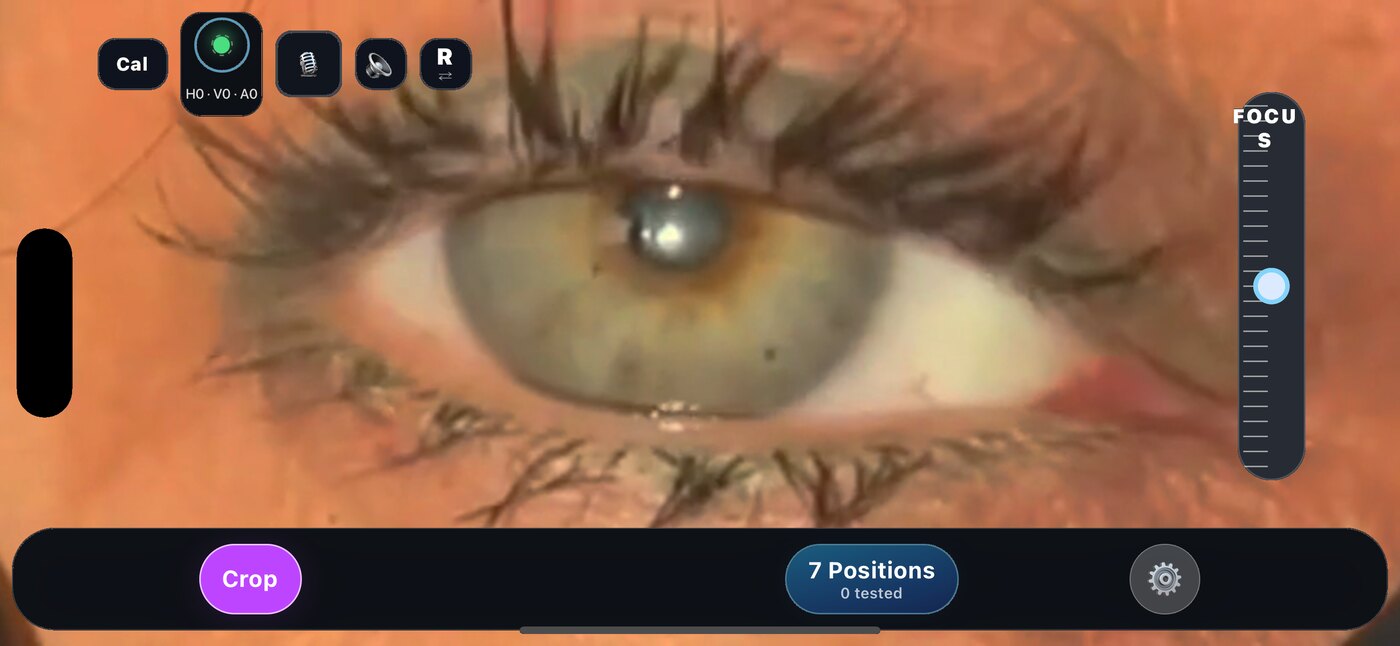
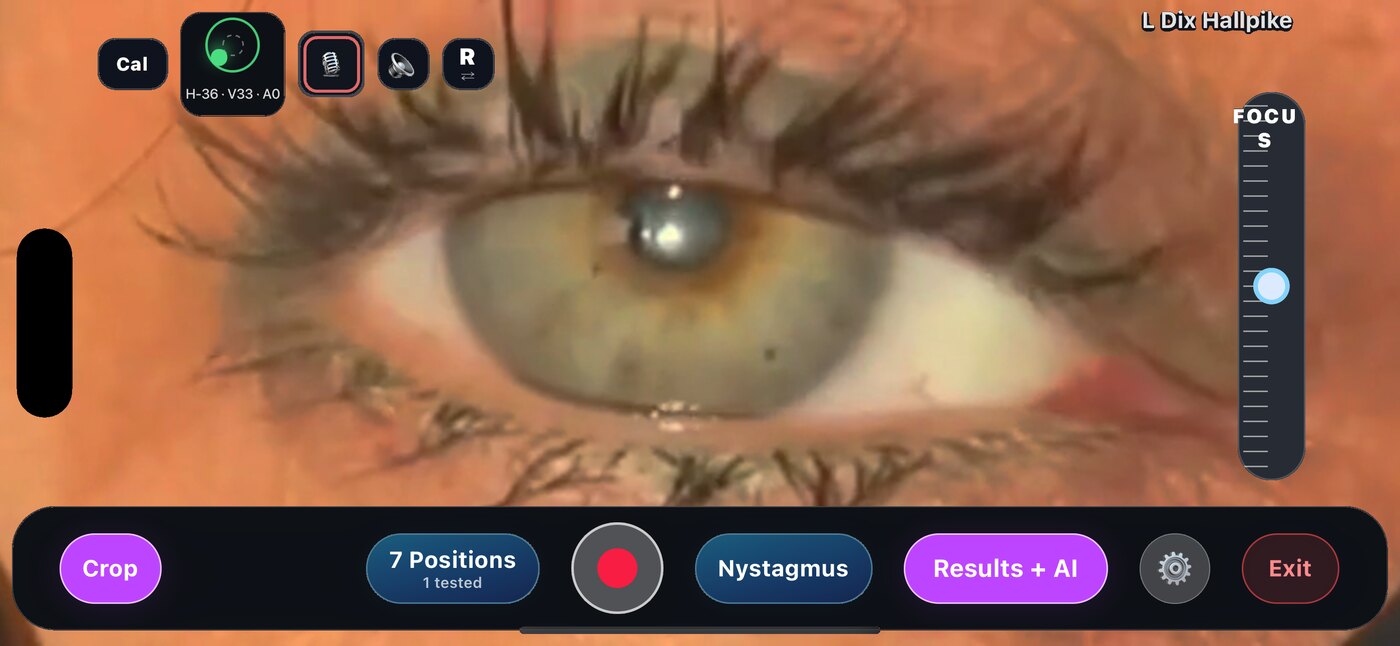
One tap on the scribe chip in the exam screen. The eye camera keeps recording; the microphone runs beside it.
Press play. The transcript fills as the consult runs.
Sentences arrive as the words they come from are spoken.
A practice consult with synthesised voices and invented names, run through the real pipeline; nine minutes shown in under a minute. Purple-marked sentences are the ones with a verbatim quote the scribe traced to a transcript turn.
Every sentence shows its work.
Hover a sentence in the note. A verbatim quote points back to the transcript turn it came from, with the speaker and the time. A finding points back to the recorded position, not to anyone’s memory.
“Two weeks ago on the Sunday, I turned over in bed towards the window, my right side, and the whole room went round. I grabbed the headboard.”
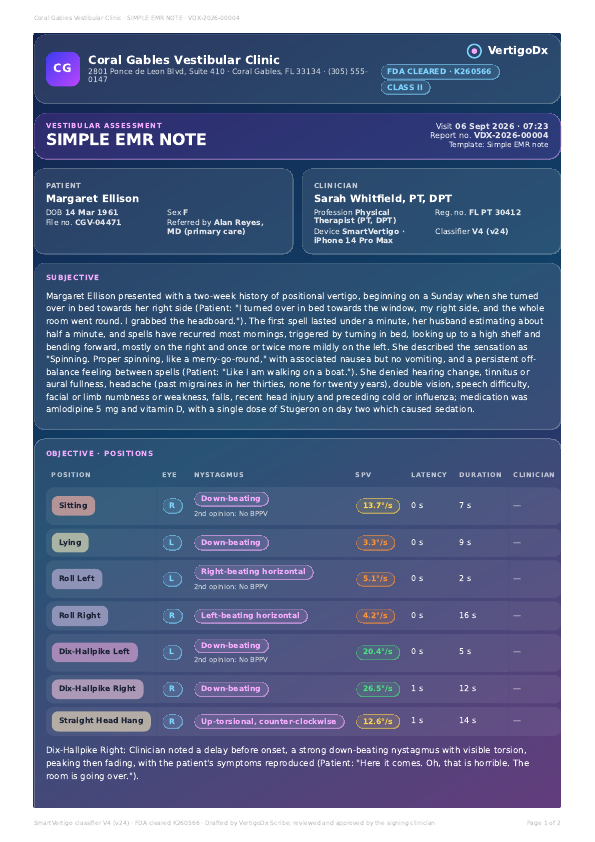
Transcript turn 4 of 98 · diarised and named by voice printThe findings table is the one thing no general-purpose scribe can write: seven protocol positions, tested or not, with eye, nystagmus, SPV, latency, duration and the clinician’s verdict, filled from the session record.
10 notes from one recording.
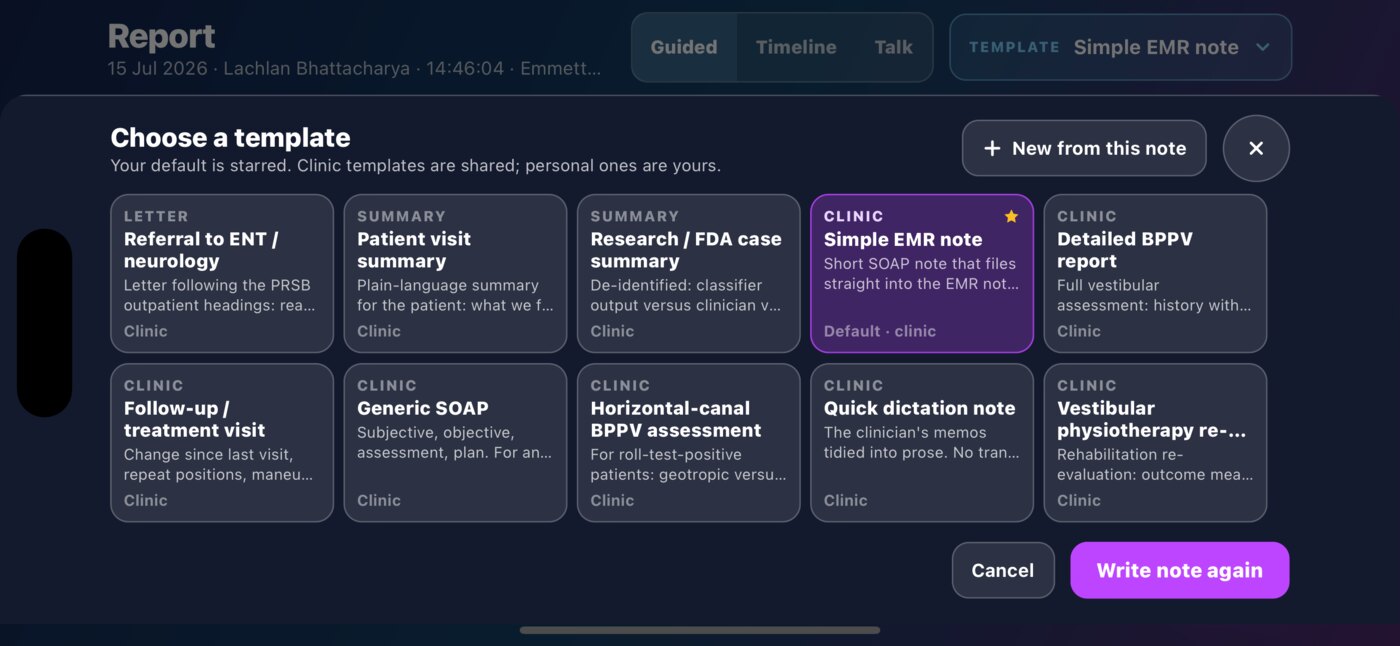
Simple EMR note, detailed BPPV report, follow-up, horizontal-canal assessment, physio re-evaluation, quick dictation, referral letter, patient summary, generic SOAP and a research summary. Each built from the AAO-HNS guideline, the Bárány criteria and VNG reporting conventions.
 Open the PDF ↗
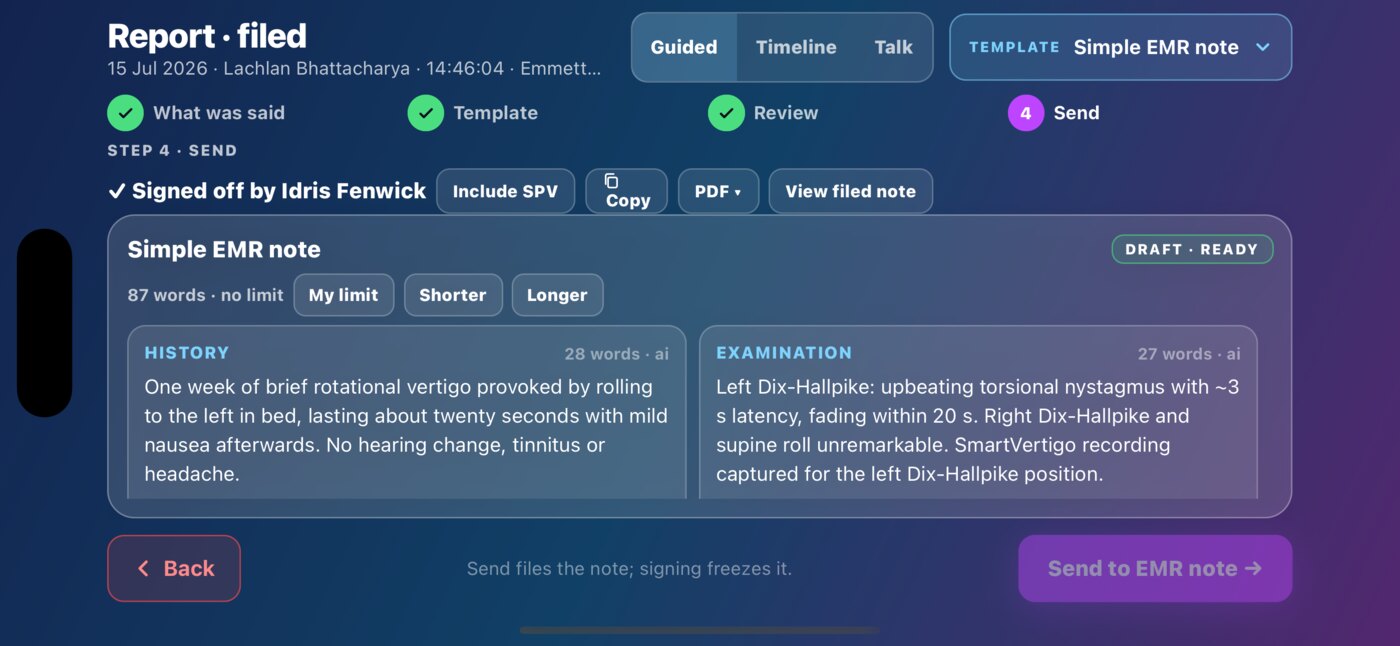
Simple EMR note
Short SOAP note that files straight into the EMR note, with the full per-position findings table and a coding line.
The transcript itself is a document too: open the consult transcript ↗ · every document on this page is from one practice visit with invented names.
Guided. Timeline. Talk.
The Report screen on the handset offers the same note three ways, and each remembers the clinician’s preference.
A four-step wizard
Template, the recording and any extra notes, the scribe’s two or three questions, then the draft. The path for a first-time user and for a busy one.
The visit in order, the note rewriting live
Positions, findings, treatment and dictations as a timeline. Tick things in or out and watch the note redraft beside them.
A scribe that asks
It asks only what the recording did not answer, and takes instructions in plain words: “make the plan shorter”, “add the DHI score”, “use the referral letter”.
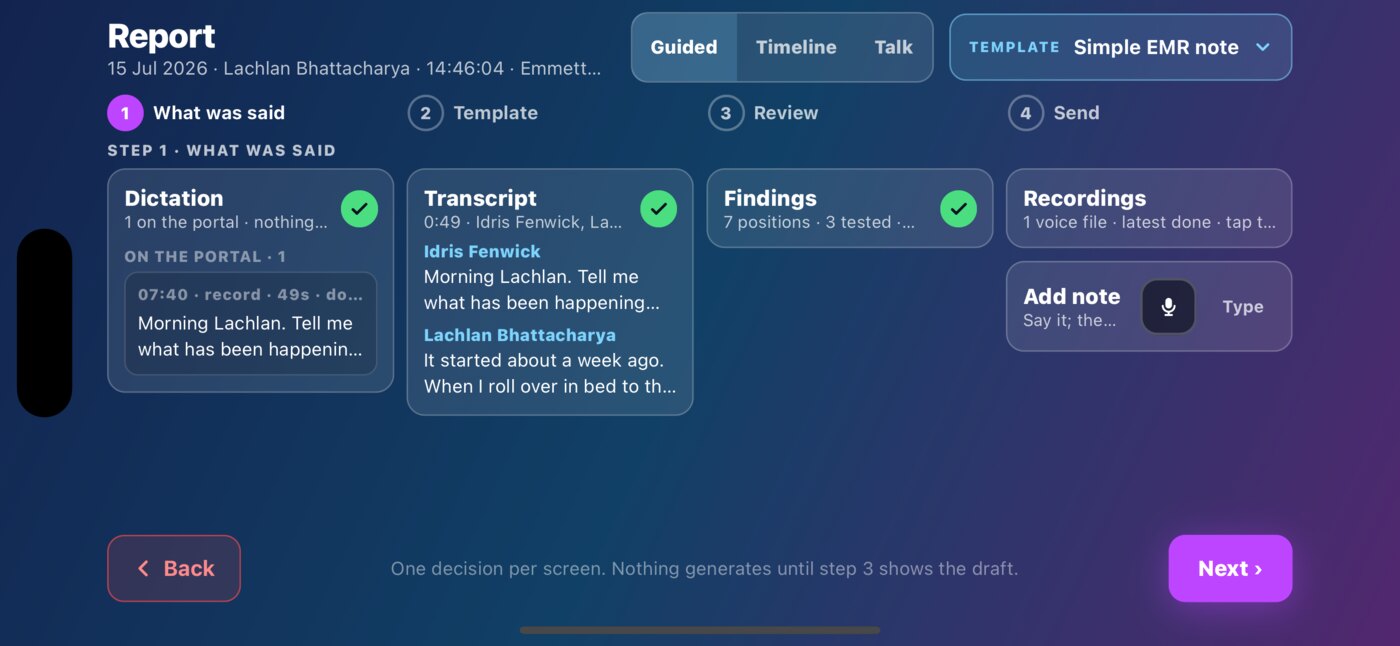
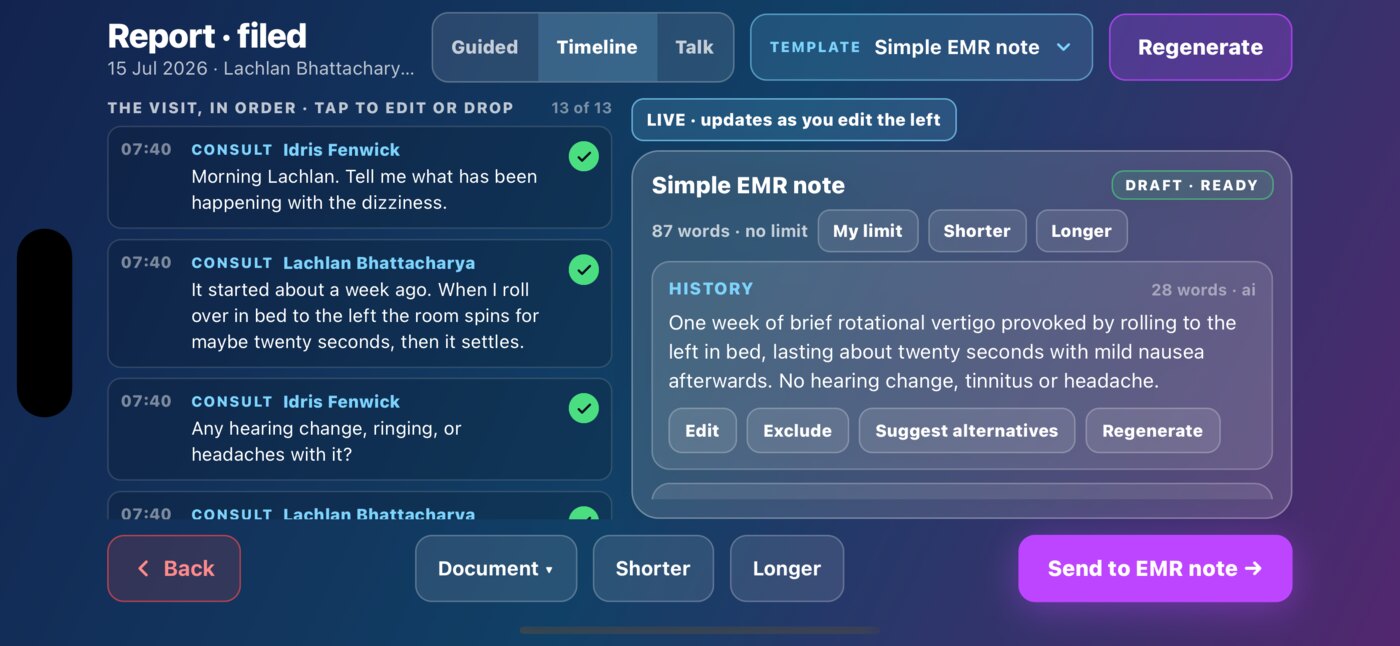
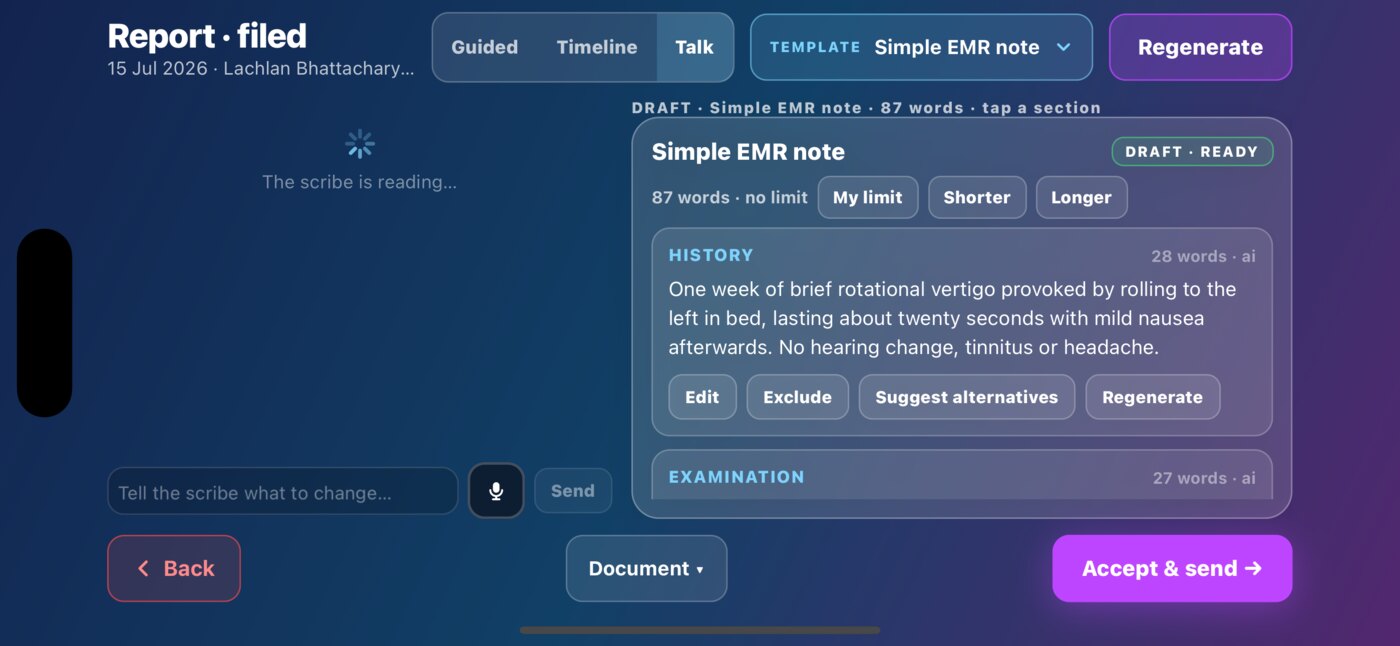
Word limits, alternatives, and a signature.
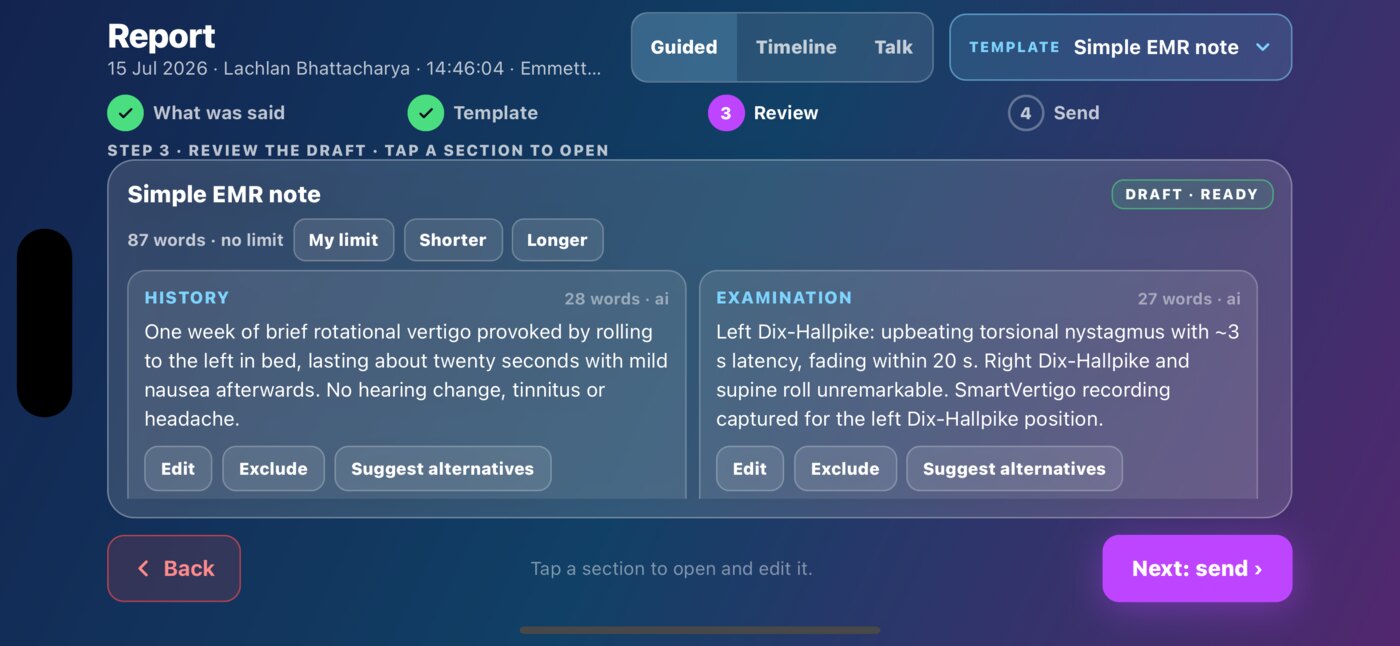
Per-template and per-doctor word limits. Section by section: edit, exclude, three alternative wordings, regenerate, shorter or longer. Nothing reaches the chart until the clinician signs.
Word limit
A limit per template, and a personal one per doctor that wins. The draft respects both.
Edit or exclude
Any section can be rewritten by hand or excluded. Excluded sections grey on screen and never print.
Three alternatives
Ask for three other wordings of a section and pick one, or ask for it shorter or longer.
Regenerate
Redraft one section from the same evidence without touching the rest of the note.
Sign
Signed by the person who examined, with their profession and registration number on the letterhead, then filed as an EMR-ready PDF.
It knows the words. You can teach it yours.
The transcriber is primed with a vestibular lexicon built from the guideline literature: canals and variants, the bedside tests, the repositioning maneuvers and their eponyms, nystagmus measurement, the medicines, and the words patients actually use. Known mis-hearings are corrected before the note engine ever sees them.
- 126 canonical terms, 323 spellings and aliases, 78 verified mis-hearings, in 11 groups, from more than 20 cited sources.
- A clinic dictionary: the practice’s own terms, brand names and people go in ahead of the shared lexicon. A clinic admin adds words in Settings and saves.
- Names of record come first: the signed-in clinician and the patient are spelled right by construction.
What happens in the forty seconds.
A two-minute consult comes back diarised, named and drafted in about 35 to 45 seconds. Here is the whole path, and where each thing is kept.
Recorded
The microphone runs beside the eye camera. The file goes to the clinic’s private store, signed URLs only.
Transcribed
Whisper large-v3-turbo, primed with the clinic dictionary and the vestibular lexicon.
Speakers named
pyannote separates the voices; an enrolled voice print names the clinician. The print is encrypted and never leaves the portal.
Drafted
The template, the transcript, the extra notes and the session’s findings go to the note engine. Sources are fenced and attributed.
Reviewed
Word limits, alternatives, exclusions, a signature. The machine transcript is immutable; the edited one is a separate, audited version.
Kept, and not kept. The consult recording stays with the visit as clinical evidence. Dictation and enrolment audio are deleted the moment their text or voice print exists. The scribe service is stateless: it fetches audio by signed link, processes it in a temporary file, deletes it, and logs only durations and model names. Every person in the practice signs in as themselves, with their own templates, limits and library.
One chip, every screen.
The scribe chip sits in the exam screen’s top strip beside the angle readout and follows the clinician: tap to record the visit, long-press for a quick memo, and a red pill on every other screen while it runs.